

4 Ps of Marketing: A Complete Guide to the Marketing Mix

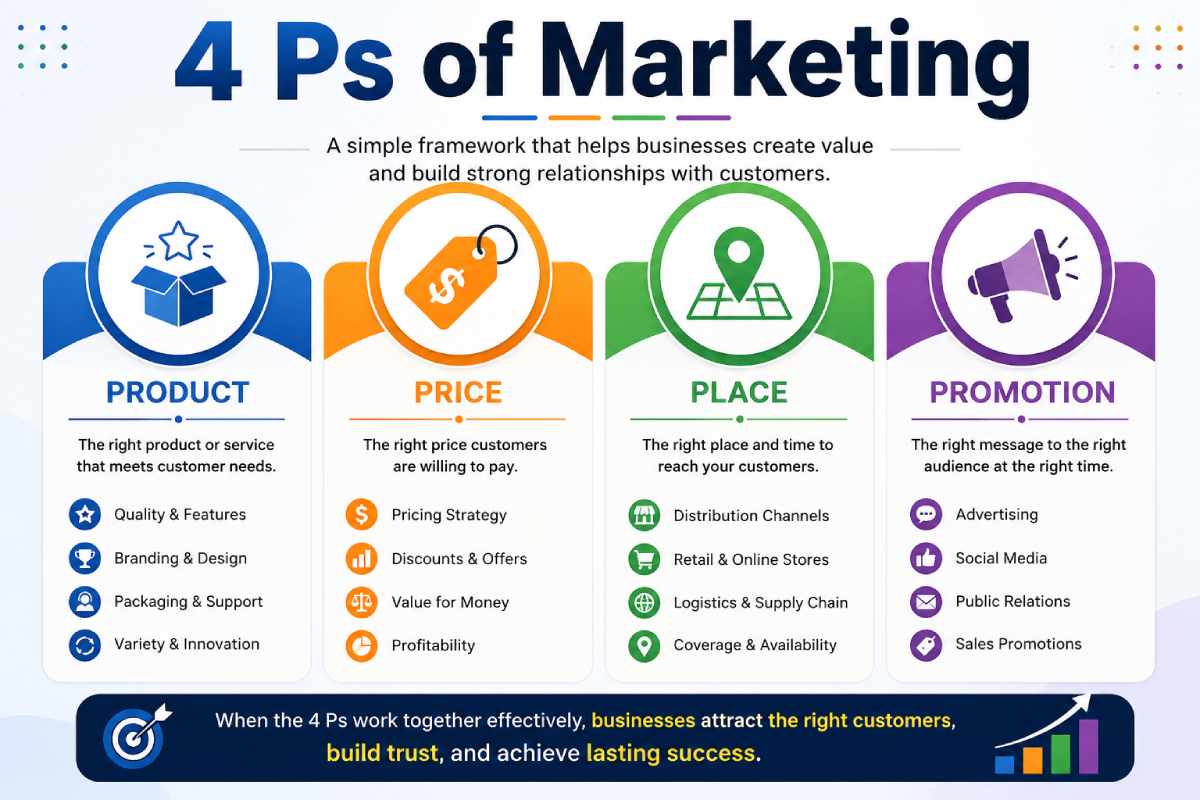
The 4Ps of marketing is the building block of every marketing plan or any plan. In marketing theory, the 4Ps model for planning products by E. Jerome McCarthy guides businesses in their effort to sell products that appeal to consumers and generate the maximum profits.
The model has four components: Product, Price, Place, and Promotion that together create a marketing mix that reaches the target customers. So if you own a small business, run a startup company, work for a multinational, or are even simply involved with some kind of business, it would really benefit you to get a hold of the 4Ps of marketing.
Businesses utilize these strategies to identify what products they will be selling, how much they’ll be costing, how they’ll be distributed to reach the customers, and how to effectively promote them. Companies with a strong command of these factors usually become better than their rivals when it comes to generating loyal customers and boosting revenue growth in the long run.
This Article is the part of Marketing Sales
What is the Marketing Mix?
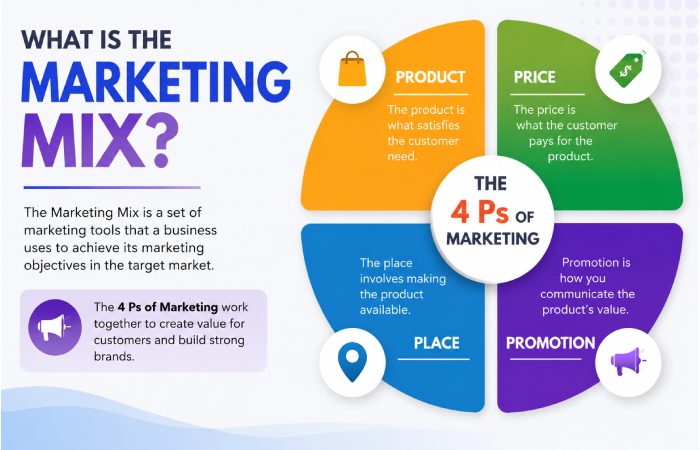
A marketing mix describes all the approaches a business puts in place to market and promote the products or services it offers. So rather than doing just one, businesses plan and organize several marketing tactics to build a cohesive customer experience.
The Four Elements of the Marketing Mix
| Marketing Mix Element | Purpose | Key Questions |
| Product | Satisfy customer needs | What should we sell? |
| Price | Generate value and profit | What should customers pay? |
| Place | Make products available | Where will customers buy? |
| Promotion | Create awareness and demand | How will customers learn about the product? |
Once all four of these elements come together then you as a business have got more of a chance to compete effectively within the marketplace you operate within.
Product Strategy
Successful product strategy begins with understanding your customer’s needs. You must provide the best product and the service with the right solution that satisfies the customer in such a way that competition simply cannot do.
Product strategy involves more than just creating an item. It includes:
- Product quality
- Features
- Design
- Packaging
- Branding
- Warranty
- Customer support
- Product lifecycle management
For example, a phone company sells much more than a telephone device. They are selling design, the innovative technology within the phone, new software updates, a helpful and effective customer service and support team, and the overall experience of using the device.
Components of an Effective Product Strategy
| Component | Description |
| Quality | Meets customer expectations consistently |
| Features | Provides useful functionality |
| Branding | Creates recognition and trust |
| Packaging | Enhances presentation and protection |
| Customer Service | Improves satisfaction after purchase |
| Product Innovation | Keeps products competitive |
Businesses often update their existing products to better meet their customers’ feedback and evolving marketplace trends.
Pricing Strategy
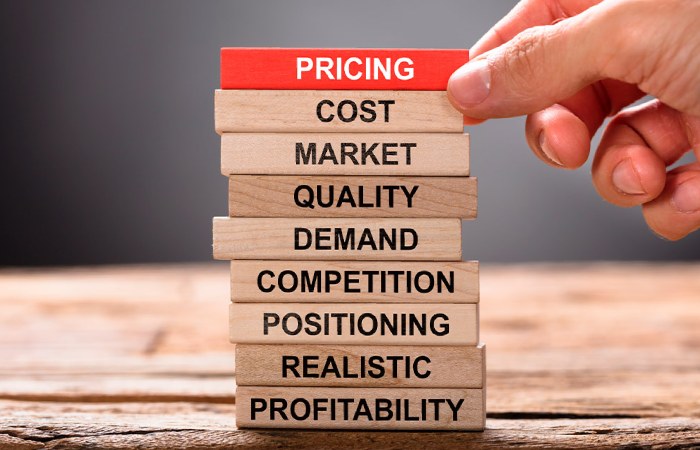
The best pricing strategy defines the level that is acceptable by the customers, while making the business earn enough. Pricing can Influence Customer’s Opinion Pricing can set the standards for the company. A premium price makes a customer believe it offers the best quality, whereas a low price will usually draw the customer who is price conscious.
Common pricing approaches include:
| Pricing Strategy | Description | Best Used For |
| Cost-Plus Pricing | Adds a profit margin to production costs | Manufacturing |
| Competitive Pricing | Matches or beats competitors | Retail |
| Penetration Pricing | Low initial price to gain market share | New products |
| Premium Pricing | Higher prices for perceived value | Luxury brands |
| Discount Pricing | Temporary price reductions | Seasonal sales |
| Value-Based Pricing | Based on customer perceived value | Innovative products |
Most business decisions aren’t based on costs alone. Business leaders evaluate pricing based on demand, competitive products or services, your image, and overall business strategy.
Place in Marketing
Place refers to a how products are accessed by customers. No amount of a good product can help if the customers can’t find them in their area. Digital distribution has revolutionized many ways of placement. Most companies these days operate both a physical store and a marketplace on line.
Distribution Channels
| Distribution Channel | Advantages |
| Retail Stores | Personal customer interaction |
| Company Website | Higher profit margins |
| E-commerce Platforms | Wide customer reach |
| Wholesalers | Efficient bulk distribution |
| Mobile Apps | Convenient purchasing |
| Social Commerce | Direct selling through social media |
The best choices would depend on where the company’s potential customers would generally go to shop.
For example:
- Grocery products perform well in supermarkets.
- Software is commonly sold online.
- Luxury goods often benefit from exclusive retail locations.
Effective distribution improves customer convenience while reducing delivery costs.
Promotion Strategy
If you want your business to communicate its value to your customers, you need to have an effective promotion plan. If promotion has come to mind as advertising, well, you need to know there’s more to it than that. Any means by which a company informs customers of products, services, ideas, and benefits and by which it entices them to purchase-or to support-what the company is marketing is called promotion.
Common promotional activities include:
- Digital marketing
- Social media marketing
- Search engine optimization (SEO)
- Email marketing
- Television advertising
- Public relations
- Sales promotions
- Influencer marketing
- Content marketing
Promotional Methods
| Promotion Method | Primary Goal |
| Advertising | Build awareness |
| Social Media | Increase engagement |
| SEO | Drive organic website traffic |
| Email Marketing | Retain customers |
| Public Relations | Build credibility |
| Sales Promotions | Increase short-term sales |
| Influencer Marketing | Reach niche audiences |
| Content Marketing | Educate potential customers |
There is typically a combination of strategies involved to ensure business success, instead of only relying on one type of advertising strategy.
Marketing Mix Examples
Understanding theory becomes easier through practical marketing mix examples.
Example 1: Coffee Shop
| Marketing Mix Element | Strategy |
| Product | Premium coffee, snacks, comfortable seating |
| Price | Mid-range pricing |
| Place | Physical cafés and online ordering |
| Promotion | Loyalty programs, Instagram marketing |
Example 2: Smartphone Company
| Marketing Mix Element | Strategy |
| Product | Innovative smartphone with premium features |
| Price | Premium pricing |
| Place | Brand stores, online marketplace, retailers |
| Promotion | TV ads, influencer campaigns, product launches |
Example 3: Online Clothing Store
| Marketing Mix Element | Strategy |
| Product | Fashion apparel with seasonal collections |
| Price | Competitive pricing with discounts |
| Place | Website and mobile app |
| Promotion | Email campaigns and social media advertising |
This illustrates that the marketing mix varies across industries and audiences.
Why the 4 Ps of Marketing Matter
The 4Ps is relevant since it assist businesses in making coordinated business choices.
Benefits include:
- Better understanding of customer needs
- Improved product positioning
- Stronger brand recognition
- Increased customer satisfaction
- More effective promotional campaigns
- Better pricing decisions
- Improved competitive advantage
Companies that routinely assess their marketing mix can react with greater readiness to market changes and customer demands.
Tips for Building an Effective Marketing Mix
Businesses should regularly review and update their marketing strategies to remain competitive.
| Best Practice | Benefit |
| Conduct market research | Understand customer needs |
| Monitor competitors | Identify opportunities |
| Test pricing strategies | Improve profitability |
| Optimize distribution channels | Increase accessibility |
| Invest in digital marketing | Reach wider audiences |
| Measure campaign performance | Improve ROI |
An effective marketing mix is not static. It evolves as customer preferences, technology, and market conditions change.
Common Mistakes to Avoid
The reason many companies fail is that they put too much focus on only one of the three components and fail to address the others.
Common mistakes include:
- Poor product-market fit
- Unrealistic pricing
- Limited distribution channels
- Weak promotional efforts
- Ignoring customer feedback
- Failing to adapt to changing market conditions
Balancing all four Ps creates a more sustainable marketing strategy.
The Future of the Marketing Mix
Despite of modern digital transformation techniques introducing us to customer-centric and the 7 Ps models, 4 Ps have proven themselves to be an effective strategy in marketing even for organizations of any size. With the advent of digital tools, the 4 Ps of marketing mix strategy are leverage in following new dimensions: Personalization and data in the Product Strategy
AI and analytics in pricing dynamics; customer engagement through Omni-channel marketing strategy Personalization in Promotion strategy (personalized offers and messages via emails, sms and social media channels) The fundamentals of 4 Ps are the building blocks of any successful marketing strategy even in the age of ever changing consumers and evolving market.
Conclusion
Product, price, place, and promotion – also called the 4 Ps of marketing – are fundamental to any effective marketing plan. With the 4 Ps in play as the marketing mix, a company can be sure to meet a demand, satisfy its audience, and successfully operate. By understanding the impact of their marketing mix product, marketing mix place, marketing mix pricing, and marketing mix promotion, businesses can better satisfy customers and achieve a higher return over time.
The success that one will often observe through real-world marketing mix examples often results from aligning the 4 Ps rather than excelling at one of them. When trying to develop a plan for a new venture or even to optimize an existing business, an excellent grasp of the 4 Ps can give you a competitive advantage.