

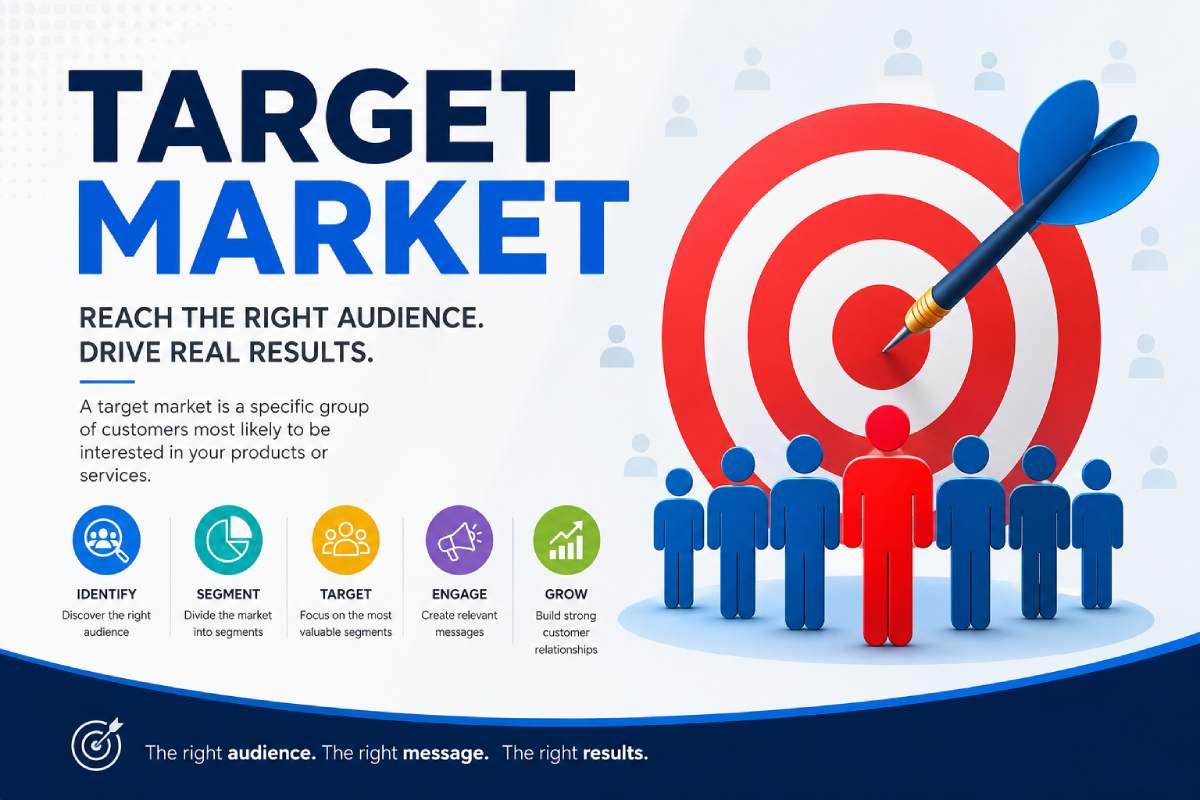
Target Market: A Complete Guide to Reaching the Right Customers

A successful business needs to know exactly who it’s selling to. Businesses are much more successful selling to a narrow group than trying to sell to the world. Finding your audience will also allow you to better develop products that address people’s pain points and develop campaigns and services to delight those customers.
If you’re running a new startup, an established company, or building a marketing plan, understanding who your customers are may be one of the first and most important steps you’ll take.
Knowing who your target audience is will shape your product or service, pricing, advertisements, customer service, and almost every other element of your business. In today’s hyper-competitive business landscape, the most successful brands are leveraging techniques like customer segmentation, audience targeting, and customer profiling. Developing customer or buyer personas is key for the most savvy of marketers, helping them increase customer satisfaction and conversion rates by meeting each customer’s needs and at the same time save marketing budget.
This Article is the part of Marketing Sales
What is a Target Market?
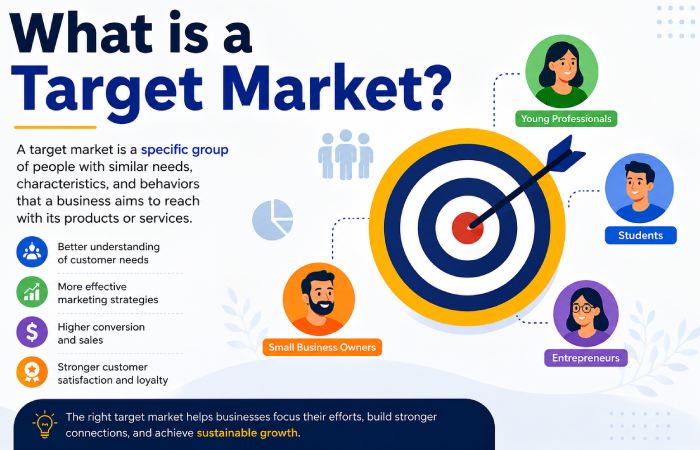
A target market refers to the specific section of customers most prone to buy and support the products or services a company is selling. These customers share certain characteristics that age, sex, income, lifestyle, purchasing habits, and interests tend to have in common. This approach, as opposed to targeting everybody, will help a company invest resources in those customers that could potentially turn out to be its customers of choice.
For example:
| Business | Target Market |
| Luxury Watch Brand | High-income professionals aged 30–60 |
| Online Learning Platform | Students and working professionals |
| Organic Baby Products | Parents with infants and toddlers |
| Gaming Accessories | Teenagers and young adults interested in gaming |
A clear target market can help businesses communicate their product better and meet customer demands for real product benefits.
A successful target market strategy is built on a solid understanding of fundamental marketing concepts which help businesses develop products and services that meet customer expectations.
Why Is Identifying a Target Market Important?

Business strategy almost anywhere can be enhanced by understanding your target market. Instead of just going out on a whim, businesses are now given actual insight on what kind of customers they have.
Some major benefits include:
| Benefit | Business Impact |
| Better Marketing | More relevant advertisements and promotions |
| Higher Conversion Rates | Customers are more likely to purchase |
| Improved Customer Experience | Products solve real customer problems |
| Reduced Marketing Costs | Less wasted advertising budget |
| Stronger Brand Loyalty | Customers connect with personalized messaging |
Companies that know their customers tend to outperform competitors because they design products around those customers’ expectations.
Customer Segmentation
Customer segmentation the approach for separating any large audience to several smaller segment groups that are defined by similar attributes. Rather than treating the customers uniformly; it allows marketers to develop particular marketing strategy for every segment of the audience.
Common segmentation categories include:
| Segmentation Type | Description | Example |
| Demographic | Age, gender, education, income | Women aged 25–40 |
| Geographic | Country, city, climate | Urban customers |
| Psychographic | Lifestyle, values, personality | Eco-conscious consumers |
| Behavioral | Buying habits and product usage | Frequent online shoppers |
Identifying and understanding individual segments of customers allows organizations to develop targeted and relevant solutions and campaigns to increase overall customer experience and sales.
Audience Targeting
After customer segmentation, companies employ audience targeting to communicate targeted marketing messages to their segmented customer groups. Customer segmentation coupled with audience targeting is process by which a marketer selects the most profitable customer segment and designs ads, promotions, or other pieces of content to those segments.
For example:
| Audience | Marketing Approach |
| College Students | Affordable pricing and social media campaigns |
| Business Owners | Productivity-focused messaging |
| Parents | Safety, convenience, and family benefits |
| Senior Citizens | Simplicity and reliability |
Digital advertising and marketing on the search engine and social media, which helps marketers to deliver tailored advertisement based on interests of user, online activity, location and demographics to reach a target segment with increased efficiency of campaigns.
Market Segmentation Strategies
The proper use of the marketing segmentation methods in business can help you know different types of customers and use marketing most effectively.
Some widely used strategies include:
| Strategy | Best Used For |
| Mass Segmentation | Large consumer markets |
| Niche Segmentation | Specialized products |
| Value-Based Segmentation | Premium customers |
| Behavioral Segmentation | Loyalty programs |
| Needs-Based Segmentation | Solving specific customer problems |
Deciding which strategy to implement is contingent upon your target industry, business objectives, competitive landscape and the customer data you possess.
Creating a Buyer Persona
Buyer persona is a fictional personification of the ideal customer made using data, information, and customer behavior. These personas help to detail buyer decisions and motivations rather than speaking to a generic audience.
Example Buyer Persona
| Attribute | Example |
| Name | Sarah |
| Age | 32 |
| Occupation | Marketing Manager |
| Income | $70,000 annually |
| Goals | Career growth and productivity |
| Challenges | Limited time for learning |
| Preferred Channels | LinkedIn, YouTube, Email |
Businesses can build different buyer personas for different customer types. Your buyer personas can help your marketing team to build targeted content and ads and also the right products that your target audience wants.
Customer Profiling
Buyer personas represent one individual but customers profiling involves a set of clients. CRM, customer buying behaviors, website analytics, survey results and social media feeds provide valuable data.
Customer profiling typically includes:
| Profile Element | Description |
| Demographics | Age, income, occupation |
| Purchasing Behavior | Frequency and spending habits |
| Interests | Hobbies and lifestyle |
| Online Activity | Preferred websites and platforms |
| Brand Loyalty | Repeat purchase behavior |
Knowing your customers helps businesses tailor their communications, suggest the right products and reduce churn.
Target Audience Examples
By familiarizing yourself with these example target audience profiles, you can make sure you find exactly the right customers for any given industry.
| Business | Target Audience |
| Fitness App | Adults aged 18–40 interested in health |
| Luxury Hotel | High-income travelers |
| Children’s Toy Store | Parents with young children |
| Coffee Shop | Students and remote workers |
| Software Company | Small and medium-sized businesses |
| Pet Food Brand | Pet owners seeking premium nutrition |
Every company employs a distinct approach when it comes to their communication, product/service cost and advertising strategy to communicate with the selected customer segment.
How to Identify Your Target Market
Finding the right target market involves research and continuous analysis.
Follow these steps:
- Analyze your current customers.
- Study competitor audiences.
- Conduct market research.
- Segment customers into meaningful groups.
- Create detailed buyer personas.
- Test marketing campaigns.
- Monitor customer feedback.
- Update customer profiles regularly.
Businesses should continuously refine their target market as customer preferences evolve over time.
Common Mistakes When Defining a Target Market
Many businesses reduce marketing effectiveness by making avoidable mistakes.
| Mistake | Better Approach |
| Targeting everyone | Focus on specific customer groups |
| Ignoring customer data | Use analytics and research |
| Assuming customer needs | Conduct surveys and interviews |
| Using outdated personas | Update profiles regularly |
| Poor segmentation | Create meaningful customer groups |
Avoiding the errors that have already been touched on assists companies in forming more meaningful consumer relationships, also assisting the performance of campaigns for your business.
Best Practices for Reaching Your Target Market
Successful businesses consistently refine their targeting strategies.
Key best practices include:
- Conduct regular customer research.
- Update buyer personas annually.
- Personalize marketing messages.
- Use customer feedback to improve products.
- Analyze campaign performance using analytics.
- Combine demographic, behavioral, and psychographic data.
Conclusion
The target market definition serves as the blueprint for all business and marketing efforts. In essence, this is the set of characteristics describing the customers you want to reach through marketing or selling efforts to ensure that the business develops products, services and marketing strategies that are targeted at and can be well-received by such customers. Companies use various tactics to target such customers including customer segmentation, audience targeting, market segmentation strategies, buyer persona creation, customer profiling and much more in order to make data-driven decisions and improve their marketing roi.
A great target market example clearly proves that every successful company aims to service a select customer base as opposed to catering to everyone.
As marketplaces change and the needs and behavior of customer evolve, periodically analyze all customer data to update and adjust your target market strategy accordingly to give your company a competitive advantage and boost your customer satisfaction.