

New Tax Regime for Salaried Employees: Tax Slabs, Standard Deduction and Calculation

Last Updated: September 14, 2026
Salaried Employees: New Tax Regime for Salary Earners The new income tax regime will make the calculation of income-tax easier for the salaried employees. It will continue to provide slabs at reduced rates, but will restrict several existing exemptions and deductions. The applicable slabs, standard deduction, and benefits can be calculated to determine the actual tax liability for salaried individuals.
The new regime will be the default regime for all eligible individual taxpayers unless taxpayers avail of the old regime when it is more advantageous to them, under the prescribed rules.
This Article Belongs to Tax Tips
What Is the New Tax Regime for Salaried Employees?
Under the salaried employee new tax regime, income is taxed according to the slab rates applicable under the latest tax rules. The regime reduces the need to calculate numerous deductions and exemptions that were commonly used under the old system.
For employees, the most important factors include gross salary, eligible standard deduction, income from other sources, and applicable tax rebates.
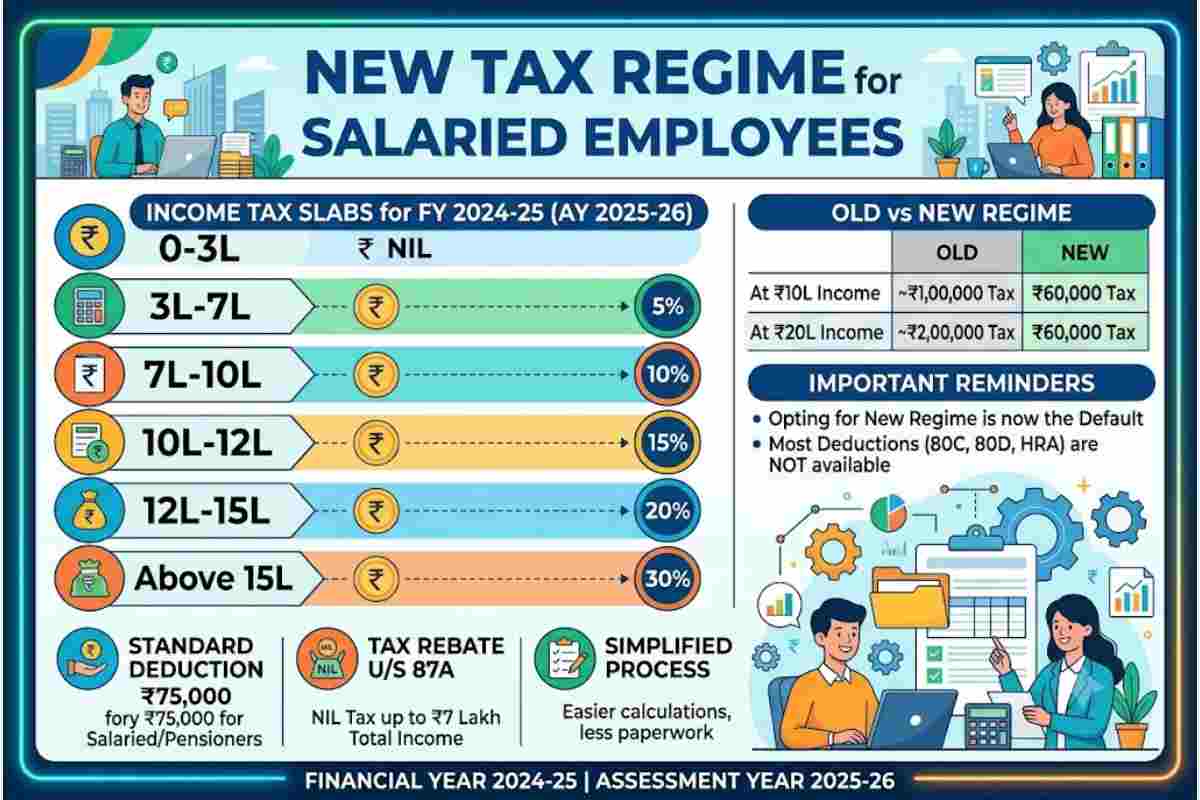
New Tax Regime Salary Slabs
For the current tax year, the applicable slabs should be checked against the latest rules notified by the Income Tax Department. A simplified illustration of the slab structure is:
| Taxable Income | Tax Rate |
|---|---|
| Up to ₹4 lakh | Nil |
| ₹4 lakh–₹8 lakh | 5% |
| ₹8 lakh–₹12 lakh | 10% |
| ₹12 lakh–₹16 lakh | 15% |
| ₹16 lakh–₹20 lakh | 20% |
| ₹20 lakh–₹24 lakh | 25% |
| Above ₹24 lakh | 30% |
The tax is calculated progressively, meaning different portions of taxable income fall into different slabs rather than the entire salary being taxed at one rate.
New Tax Regime Standard Deduction
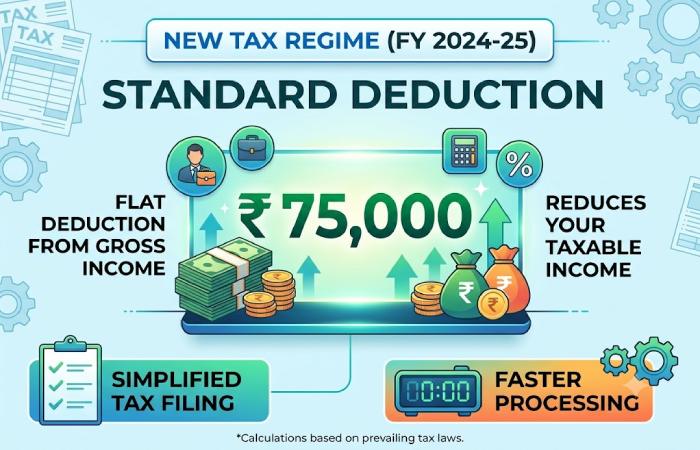
One of the most important benefits for employees is the new tax regime standard deduction. Salaried taxpayers can reduce their taxable salary by the applicable standard deduction before calculating income tax.
For example, if an employee has a gross salary of ₹12 lakh and qualifies for a ₹75,000 standard deduction, the taxable salary would be ₹11.25 lakh, before considering other applicable income or adjustments.
The standard deduction is particularly useful because it is available without requiring employees to submit bills for individual expenses.
New Tax Regime Salary Exemptions
The new tax regime salary exemptions are more restricted compared with the old regime. Several popular deductions and exemptions associated with salary income are not generally available under the new system.
However, certain benefits and deductions may continue to apply depending on the taxpayer and circumstances. Employers and employees should therefore distinguish between salary components that are merely shown on a payslip and amounts that are actually eligible for tax relief.
For example, the tax treatment of employer contributions to specified retirement schemes may differ from ordinary salary components.
Income Tax for Salaried Employees: What Is Taxable?
Income tax for salaried employees is not necessarily calculated directly on the employee’s CTC. CTC can include employer contributions and benefits that have different tax treatments.
A simplified calculation generally involves:
Gross taxable salary – eligible deductions = taxable income
The applicable slab rates are then applied to taxable income. Any eligible rebate, surcharge and health and education cess are considered subsequently.
Employees should also account for income from sources such as interest, rent or investments where applicable.
Salary Tax Calculation New Regime: Example
Consider a salaried employee with an annual salary of ₹15 lakh who qualifies for the standard deduction.
| Particulars | Amount |
|---|---|
| Gross salary | ₹15,00,000 |
| Standard deduction | ₹75,000 |
| Taxable salary | ₹14,25,000 |
The ₹14.25 lakh taxable income is then divided across the applicable tax slabs.
The calculation is progressive, so the first portion is taxed at 0%, followed by the applicable 5%, 10%, 15% and other slab rates as the income moves into higher brackets. The final tax liability may also depend on rebate eligibility, surcharge and cess. since it confirms the ₹4 lakh–₹8 lakh, ₹8 lakh–₹12 lakh and subsequent new-regime slabs for AY 2026–27.
New Tax Regime vs Old Regime for Salaried Employees
Choosing between the two regimes depends largely on income level and the deductions and exemptions an employee can claim.
| Factor | New Tax Regime | Old Tax Regime |
|---|---|---|
| Tax rates | Generally lower slab rates | Higher slab rates |
| Standard deduction | Available | Available |
| 80C deductions | Generally not available | Available |
| HRA exemption | Generally restricted/not available | Available subject to conditions |
| Home-loan interest benefits | Restricted | Wider availability subject to conditions |
| Tax calculation | Simpler | More deduction-focused |
Employees with relatively few deductions may find the new regime easier and potentially more tax-efficient. Those making substantial eligible investments or claiming exemptions may need to compare both regimes carefully.
How Should Salaried Employees Choose the New Regime?
The best option depends on individual circumstances. Before selecting a regime, employees should compare their estimated tax liability under both systems rather than choosing solely based on the headline tax rates.
Consider your:
- Annual salary and taxable allowances
- Standard deduction
- Eligible investments and deductions
- House rent and HRA eligibility
- Home-loan interest
- Employer retirement contributions
- Other taxable income
- Eligibility for applicable rebates
Final Thoughts
The New Tax Regime for Salaried Employees offers a simpler approach to taxation through revised slab rates and fewer deductions. The standard deduction provides an important benefit to salaried taxpayers, while many traditional exemptions available under the old regime are restricted.
For an accurate salary tax calculation under the new regime, employees should calculate taxable income first and then compare their final liability under both regimes. Since tax rules and thresholds can change, taxpayers should verify the applicable rates and provisions for the relevant financial year before filing their return.