

Old Tax Regime vs New Tax Regime: Which One Is Better?

Last Updated: September 14, 2026
Old tax regime vs new tax regime: Which is better? An individual taxpayer in India needs to decide that between old tax regime vs new tax regime. New tax regime is classified in comparison to the old tax regime as it divides the slabs; and it also introduces exemptions and deductions. According to the Income Tax Department, the new tax regime is the default regime, while eligible taxpayers can opt for the old tax regime and claim applicable deductions and exemptions.
This Article Belongs to Tax Tips
New vs Old Tax Regime: Key Differences
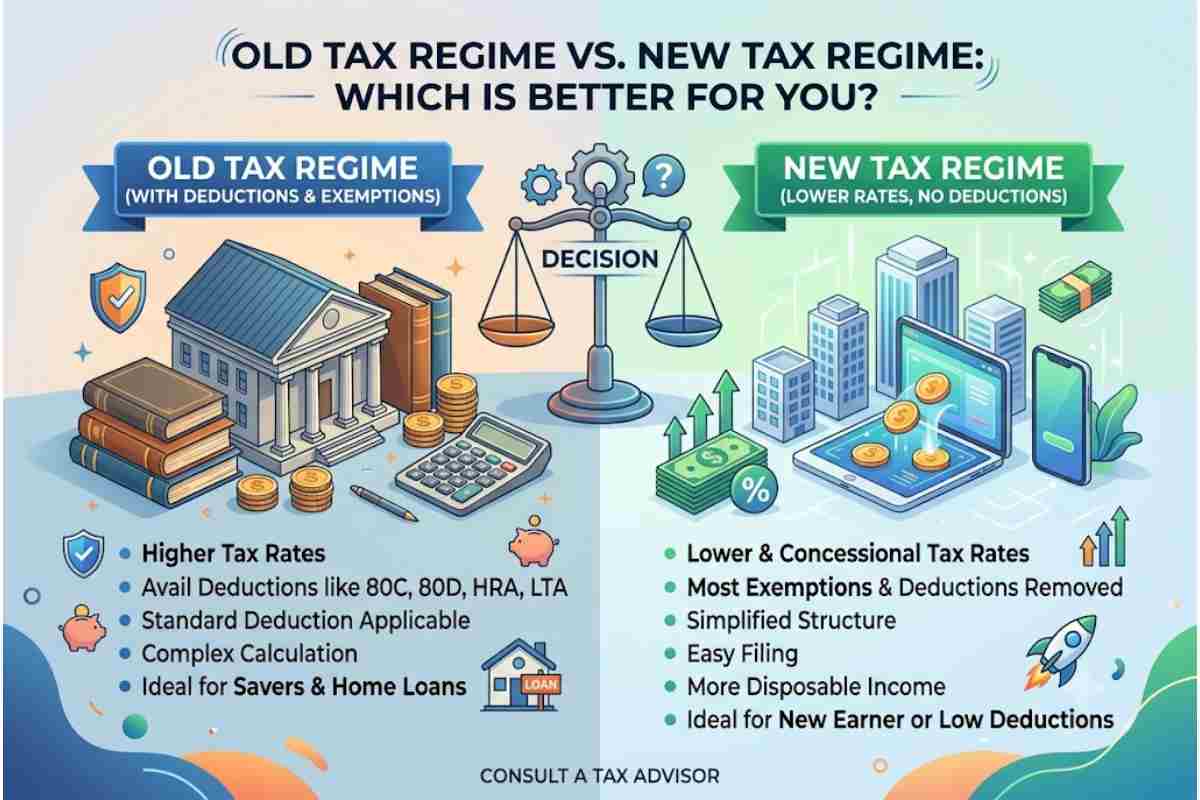
The new tax structure was introduced to keep income-tax calculations simple and fewer exemptions and deductions for lower tax rates. The old structure allows for several deductions, including investments, premium of insurance, and deductions related to housing.
| Feature | Old Tax Regime | New Tax Regime |
|---|---|---|
| Tax rates | Higher slab rates | Lower slab rates |
| Standard deduction for salaried taxpayers | Available | Available |
| Section 80C deduction | Available | Generally not available |
| Section 80D deduction | Available | Generally not available |
| HRA exemption | Available, subject to conditions | Generally not available |
| Home-loan interest benefits | Available subject to conditions | More restricted |
| Tax calculation | More deductions and exemptions | Simpler calculation |
| Best suited for | Taxpayers with substantial deductions | Taxpayers seeking simpler taxation |
Old Tax Regime vs New Tax Regime Comparison
The biggest difference between the two systems is how taxable income is calculated.
Tax planning strategies below 10 6 – How to plan for tax planning in the old tax regime Tax rules for tax deductions & exemptions Old tax regime Tax rules for tax deductions Old tax regime Tax rules for tax exemptions Old tax regime Under the old tax regime, a taxpayer can reduce his tax liability by claiming available tax deductions and exemptions, such as Section 80C, Section 80D (health insurance premiums), and the like, housing benefits.
The new tax regime benefits include simpler tax calculations and lower tax rates across income slabs. Taxpayers who do not make substantial tax-saving investments may find the new regime more convenient.
However, the better option depends on individual income, deductions, investments, and exemptions.
New Tax Regime Benefits
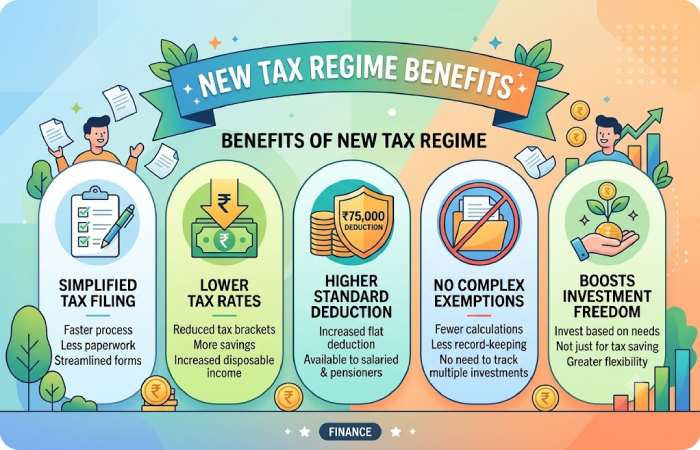
The new regime is designed to make taxation simpler. Some important benefits include:
- Lower tax rates across applicable income slabs.
- Fewer exemptions and deductions to track.
- Easier tax planning for individuals without large tax-saving investments.
- Standard deduction available to eligible salaried and pension taxpayers.
- Reduced dependence on investment-based tax planning.
The new regime can therefore be attractive to taxpayers who prefer a straightforward tax structure rather than making investments primarily to reduce their tax liability.
Benefits of the Old Tax Regime
The old regime remains relevant for taxpayers who can claim significant deductions. Some commonly used benefits include:
- Section 80C deductions for eligible investments and payments.
- Section 80D deduction for eligible health insurance premiums.
- House Rent Allowance (HRA) exemption for eligible salaried individuals.
- Certain home-loan-related tax benefits.
- Other eligible exemptions and deductions depending on individual circumstances.
For someone with substantial eligible deductions, the old regime may result in lower taxable income and potentially lower overall tax.
Which Tax Regime Is Better?
There is no single answer to which tax regime is better because the result depends on your financial situation.
For example, consider two salaried taxpayers earning the same annual income. If one taxpayer has a home loan, pays eligible health insurance premiums, receives HRA, and makes substantial eligible investments, the old regime could be worth considering.
Another taxpayer with minimal deductions may benefit from the new regime because there are fewer tax-saving requirements and the calculation is simpler.
The best approach is to calculate tax liability under both options before making a decision.
Old vs New Tax Regime: Who Should Choose What?
| Taxpayer profile | Potentially suitable regime |
|---|---|
| Few deductions and exemptions | New tax regime |
| Significant 80C investments | Old regime may be beneficial |
| Eligible HRA exemption | Old regime may be beneficial |
| Significant eligible health insurance deduction | Old regime may be beneficial |
| Prefers simple tax calculation | New tax regime |
| Large number of eligible deductions | Old regime may be worth comparing |
These are general guidelines rather than universal rules. The actual result depends on taxable income and eligible deductions.
How to Compare Both Tax Regimes
Before selecting a regime, calculate your taxable income under both systems. Start by identifying your gross income and applicable standard deduction. Then list all eligible deductions and exemptions under the old regime.
For the new regime, calculate taxable income using the deductions and benefits permitted under the applicable rules.
Finally, compare the resulting tax liability, including applicable cess and surcharge where relevant. The regime producing the lower overall tax liability may be financially preferable.
Taxpayers should also consider whether their choice fits their broader financial planning goals. Investments should not be made solely for tax savings if they do not suit their financial needs.
Conclusion
The old tax regime vs new tax regime decision depends primarily on your income and the deductions and exemptions you can legitimately claim. The old regime can be attractive for taxpayers with substantial eligible deductions, while the new regime may suit those who want simpler taxation and have fewer deductions.
When making an old tax regime vs new tax regime comparison, don’t rely only on headline tax rates. Calculate your actual tax liability under both systems using your income, investments, insurance premiums, housing benefits, and other eligible deductions. This provides a clearer answer to which tax regime is better for your individual circumstances.