

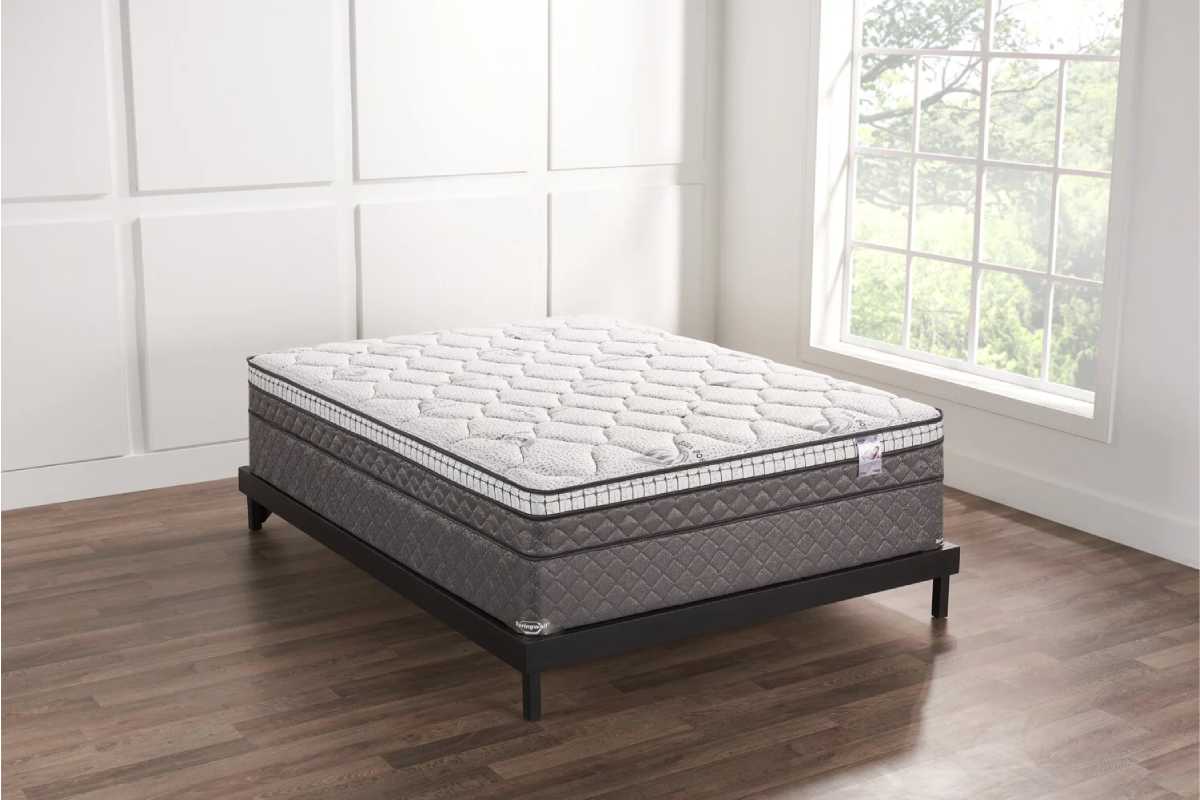
Twin Box Spring for Mattress: A Complete Guide

A twin box spring for mattress is one of the most essential yet often misunderstood components of a bed setup. While mattresses receive most of the attention, the foundation beneath them plays a crucial role in comfort, durability, and sleep quality. Whether you’re furnishing a child’s bedroom, a guest room, or a compact living space, understanding how a twin box spring works can help you make a smarter purchase.
This comprehensive guide explains everything you need to know about twin box springs—from structure and materials to benefits, comparisons, and buying tips—while balancing detailed explanations with easy-to-read tables.
What Is a Twin Box Spring?
A twin box spring is a rectangular bed base designed to support a twin-size mattress (typically 38 x 75 inches). It sits between the mattress and the bed frame, acting as a shock absorber and structural support system.
Traditionally, box springs were made using wooden frames filled with metal coils (springs), which is how they got their name. Modern versions may use metal grids, slats, or hybrid materials.
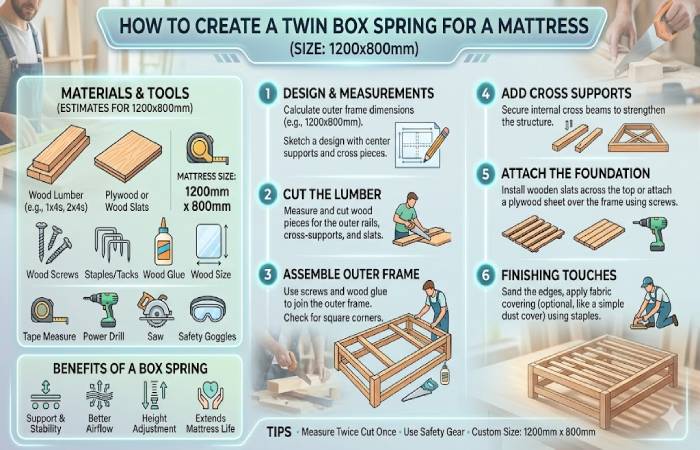
Key Features of a Twin Box Spring
| Feature | Description |
| Size | Designed for twin mattresses (38” x 75”) |
| Structure | Wood or metal frame with internal support system |
| Covering | Fabric or polyester outer layer |
| Height | Typically 4” to 9” (standard or low-profile) |
| Function | Support, shock absorption, airflow |
Structure and Materials of Twin Box Springs
Understanding the construction helps you choose the right type based on durability and comfort needs.
Common Materials Used
| Material | Characteristics | Pros | Cons |
| Wood | Traditional frame with slats | Lightweight, adjustable slats | Less durable than metal |
| Metal | Steel frame with fixed slats | Strong, durable, long-lasting | Heavier, less flexible |
| Hybrid | Steel + wood slats | Balanced support and strength | Slightly higher cost |
| Fabric Cover | Polyester or linen wrap | Aesthetic appeal, dust protection | Can wear over time |
| Plastic Components | Used in joints or connectors | Lightweight, cost-effective | Not fully plastic-built |
Types of Twin Box Springs
Different designs suit different mattress types and user preferences.
Box Spring Types Comparison
| Type | Description | Best For |
| Traditional Box Spring | Contains actual springs | Innerspring mattresses |
| Low-Profile Box Spring | Thinner (4–5 inches) | Modern low-height beds |
| Metal Box Spring | Steel frame with slats | Heavy mattresses |
| Split Box Spring | Two-piece design | Easy transport |
| Smart/Foldable Box Spring | Foldable metal frame | Small spaces, mobility |
Benefits of Using a Twin Box Spring
A twin box spring offers several functional advantages beyond just elevating your mattress.
Key Benefits
| Benefit | Explanation |
| Improved Support | Distributes weight evenly |
| Mattress Longevity | Reduces wear and tear |
| Shock Absorption | Minimizes motion impact |
| Better Airflow | Keeps mattress cool |
| Added Height | Makes getting in/out easier |
According to sleep research from the Sleep Foundation, proper mattress support significantly improves sleep quality and reduces pressure points, making the right foundation essential.
Do You Really Need a Twin Box Spring?
Not all mattresses require a box spring. The need depends on mattress type and bed frame.
Mattress Compatibility Table
| Mattress Type | Box Spring Needed? | Reason |
| Innerspring | Yes | Designed for flexible support |
| Memory Foam | No | Needs firm, flat surface |
| Latex | No | Already provides support |
| Hybrid | Sometimes | Depends on manufacturer |
| Air Mattress | No | Requires solid base |
For official guidance, you can refer to recommendations from American Academy of Sleep Medicine, which emphasizes proper support systems tailored to mattress types.
Twin Box Spring vs Platform Bed
Many people compare box springs with platform beds before purchasing.
Comparison Table
| Feature | Twin Box Spring | Platform Bed |
| Support Type | Spring or slat-based | Solid or slatted base |
| Height | Higher | Lower |
| Mattress Compatibility | Limited | Works with most types |
| Airflow | Good | Moderate |
| Cost | Additional cost | All-in-one solution |
Top Twin Box Spring Features to Look For
Before buying, consider these critical features.
Buying Checklist
| Feature | Why It Matters |
| Weight Capacity | Ensures durability |
| Height | Matches bed frame aesthetics |
| Noise-Free Design | Prevents squeaking |
| Assembly | Easy setup saves time |
| Cover Quality | Protects internal structure |
Popular Twin Box Spring Products
Here are some commonly available options and their key specifications.
Product Comparison Table
| Product Name | Height | Material | Weight Capacity | Key Feature | Price |
| Castle Place Metal Box Spring | 8” | Steel | High | Noise-free design | $98 |
| QFTIME Metal Box Spring | 5” | Steel | Heavy-duty | Minimalist structure | $104.99 |
| Mainstays Smart Box Spring | 7” | Steel | 600 lbs | Foldable design | $79 |
| Continental Sleep Wooden Box Spring | 4” | Wood | Medium | Classic build | $141 |
| Zinus Metal + Wood Slats | 7.5” | Hybrid | 350–700 lbs | Strong framework | $88.23 |
Advantages and Disadvantages
Pros and Cons Table
| Pros | Cons |
| Extends mattress life | Not always necessary |
| Adds height and comfort | Extra cost |
| Improves airflow | Can be bulky |
| Absorbs motion | Limited compatibility |
Maintenance and Care Tips
Proper maintenance can extend the lifespan of your box spring.
Care Guide
| Tip | Explanation |
| Rotate Periodically | Ensures even wear |
| Keep Dry | Prevents mold and damage |
| Clean Fabric Cover | Maintains hygiene |
| Check Frame | Tighten loose parts |
| Use Bed Frame | Avoids structural damage |
Common Mistakes to Avoid
Many buyers make simple mistakes that affect performance.
Mistakes Table
| Mistake | Impact |
| Using with foam mattress | Reduces support |
| Ignoring weight capacity | Leads to sagging |
| Skipping frame support | Causes damage |
| Choosing wrong height | Affects comfort |
Cost of Twin Box Springs
Prices vary depending on material, brand, and features.
Price Range Table
| Type | Price Range |
| Basic Wood Box Spring | $70 – $120 |
| Metal Box Spring | $80 – $150 |
| Foldable Box Spring | $75 – $130 |
| Premium Hybrid Models | $100 – $200 |
When to Replace Your Twin Box Spring
A worn-out box spring can negatively impact your sleep.
Signs You Need Replacement
| Sign | Meaning |
| Squeaking Noise | Internal wear |
| Sagging | Loss of support |
| Broken Slats | Structural failure |
| Uneven Mattress | Poor foundation |
Expert Tips for Choosing the Right Twin Box Spring
Choosing the right box spring doesn’t have to be complicated.
Smart Buying Tips
| Tip | Benefit |
| Match mattress type | Ensures compatibility |
| Measure bed height | Improves comfort |
| Check warranty | Long-term protection |
| Read reviews | Avoid poor-quality models |
| Consider airflow | Better sleep temperature |
Conclusion
A twin box spring for mattress is more than just a base—it’s a foundational component that directly impacts your sleep quality, mattress lifespan, and overall comfort. While modern mattresses like memory foam and latex may not always require one, traditional innerspring mattresses still benefit significantly from the support and shock absorption a box spring provides.
Today’s box springs come in a wide range of materials, designs, and price points, making it easier than ever to find one that fits your needs. Whether you prefer a durable metal frame, a lightweight wooden design, or a foldable smart base, the key is to choose a model that complements your mattress and bed frame.