

Strength And Conditioning Jobs: Complete Career Guide for 2026

Strength and conditioning jobs have become one of the most dynamic and rewarding career paths in the modern fitness and sports industry. A strength and conditioning coach is a specialized fitness professional responsible for improving athletic performance through scientifically designed training programs. These professionals work closely with athletes, teams, and general fitness clients to enhance strength, speed, endurance, flexibility, and injury prevention.
With the rapid growth of sports science and increasing awareness of fitness, demand for qualified professionals in this field is steadily rising worldwide. According to the National Strength and Conditioning Association, strength and conditioning professionals play a critical role in bridging the gap between athletic performance and health science.
What Are Strength and Conditioning Jobs?
Strength and conditioning jobs revolve around designing and implementing training programs that optimize physical performance. These roles go beyond traditional gym training by incorporating biomechanics, nutrition, recovery strategies, and injury prevention.
Professionals in this field often work in:
- Professional sports teams
- Colleges and universities
- High schools
- Fitness centers and gyms
- Rehabilitation clinics
They assess athletes’ physical conditions and create customized training plans that improve overall performance while minimizing injury risks.
Core Responsibilities of Strength and Conditioning Coaches
| Responsibility | Description |
| Performance Training | Develop programs to improve strength, speed, agility, and endurance |
| Injury Prevention | Design routines that reduce injury risks |
| Athlete Assessment | Evaluate fitness levels using testing methods |
| Recovery Planning | Implement rest, stretching, and rehabilitation strategies |
| Collaboration | Work with coaches, therapists, and nutritionists |
| Monitoring Progress | Track athlete performance and adjust plans |
Essential Skills Required
To succeed in strength and conditioning jobs, professionals must combine scientific knowledge with practical coaching abilities.
| Skill | Importance |
| Exercise Science Knowledge | Understanding anatomy and physiology |
| Communication Skills | Clear instructions and motivation |
| Leadership | Managing athletes and teams |
| Analytical Thinking | Assessing performance data |
| Adaptability | Customizing programs for different athletes |
| Time Management | Handling multiple training schedules |
Educational Requirements and Certifications
Most strength and conditioning professionals hold degrees in exercise science, kinesiology, or sports science. Certifications significantly improve job prospects.
Top Certifications
| Certification | Organization | Details |
| CSCS (Certified Strength & Conditioning Specialist) | National Strength and Conditioning Association | Gold standard for professionals |
| NASM-CPT | National Academy of Sports Medicine | Focuses on personal training |
| ACE Certification | American Council on Exercise | Widely recognized fitness certification |
| ISSA Certification | International Sports Sciences Association | Flexible and globally accepted |
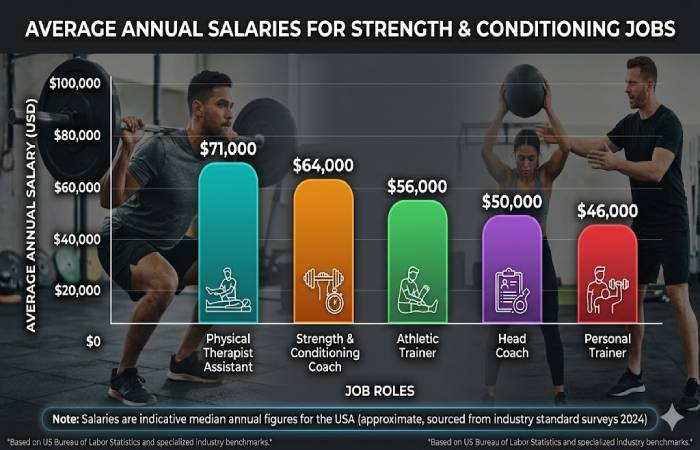
Types of Strength and Conditioning Jobs – Salary Table
| Job Role | Description | Average Salary (Annual) | Hourly Rate | Experience Level |
| Strength and Conditioning Coach | Works with athletes to improve performance through structured training programs | $45,000 – $75,000 | $22 – $36 | Mid to Advanced |
| Personal Trainer | Helps general clients achieve fitness and body goals | $30,000 – $60,000 | $15 – $30 | Entry to Mid |
| Athletic Trainer | Provides injury prevention, emergency care, and rehabilitation support | $50,000 – $70,000 | $24 – $34 | Mid |
| Physical Therapist Assistant | Supports physical therapists in recovery and rehab programs | $45,000 – $65,000 | $22 – $31 | Entry to Mid |
| Head Coach | Leads teams and oversees training strategies and performance | $60,000 – $100,000+ | $30 – $50+ | Advanced |
Job Roles and Salary Overview
Below is a detailed breakdown of real-world job roles similar to those in the industry:
| Job Title | Description | Salary | Job Type |
| CAQ Associate Head Coach | Leads regional practice groups and manages administration | $45,000 – $50,000/year | Full-time |
| Physical Therapist Assistant | Implements patient care plans and therapy routines | Varies ($45K–$60K avg) | Full-time |
| Athletic Trainer | Manages injuries and recovery of athletes | $50,000 – $70,000/year | Full-time |
| Head Coach (Cheerleading) | Develops team performance and leadership | $40,000 – $65,000/year | Full-time |
| Fitness Instructor | Conducts training sessions in gymnastics, dance, etc. | $30/session | Contract |
| Head Trainer | Oversees gym operations and trainers | $25–$30/hour | Part-time |
| Personal Trainer | Provides customized fitness coaching | $20–$30/hour | Part-time |
Work Environment and Schedule
Strength and conditioning jobs often require flexible schedules. Professionals may work:
| Work Aspect | Details |
| Hours | Early mornings, evenings, weekends |
| Locations | Gyms, sports facilities, schools |
| Travel | Required for sports teams |
| Physical Demand | High activity level |
| Team Interaction | Constant collaboration |
Career Growth Opportunities
The field offers excellent long-term growth opportunities. With experience and advanced certifications, professionals can move into leadership roles.
| Career Level | Role |
| Entry-Level | Assistant Trainer, Intern |
| Mid-Level | Strength Coach, Personal Trainer |
| Advanced | Head Coach, Performance Director |
| Expert | Sports Scientist, Consultant |
Benefits of a Career in Strength and Conditioning
A career in this field offers both personal and professional rewards.
| Benefit | Explanation |
| High Job Satisfaction | Direct impact on athlete success |
| Growing Industry | Increasing demand globally |
| Diverse Opportunities | Work in sports, healthcare, fitness |
| Active Lifestyle | Physically engaging work |
| Networking | Collaboration with sports professionals |
Challenges in Strength and Conditioning Careers
While rewarding, the field comes with challenges.
| Challenge | Description |
| Long Hours | Includes weekends and travel |
| Physical Fatigue | Constant activity |
| Competitive Field | Requires certifications and experience |
| Pressure | Performance expectations from athletes |
How to Get Started
Starting a career in strength and conditioning requires a clear roadmap.
Step-by-Step Guide
| Step | Action |
| 1 | Earn a degree in exercise science or related field |
| 2 | Obtain certifications like CSCS |
| 3 | Gain internship experience |
| 4 | Build a professional network |
| 5 | Apply for entry-level positions |
Tools and Technology Used
Modern strength and conditioning professionals rely on technology to track performance.
| Tool | Purpose |
| Fitness Apps | Track workouts and progress |
| Wearable Devices | Monitor heart rate and activity |
| Performance Software | Analyze athlete data |
| Recovery Tools | Foam rollers, massage devices |
External Resources for Learning
To gain deeper insights and stay updated, refer to high-authority resources:
- National Strength and Conditioning Association – Industry certifications and research
- American College of Sports Medicine – Guidelines on exercise science
- National Academy of Sports Medicine – Professional training programs
These platforms provide research-backed knowledge and certification programs that are recognized globally.
Future Trends in Strength and Conditioning
The industry is evolving with advancements in sports science and technology.
| Trend | Impact |
| Data-Driven Training | More precise performance tracking |
| AI in Fitness | Personalized workout plans |
| Remote Coaching | Online training programs |
| Holistic Fitness | Focus on mental and physical health |
| Injury Prevention Science | Advanced recovery techniques |
Final Thoughts
Strength and conditioning jobs offer a powerful blend of science, coaching, and real-world impact. Professionals in this field play a crucial role in improving athletic performance, preventing injuries, and enhancing overall fitness levels.
Whether you aspire to work with elite athletes or help individuals achieve personal fitness goals, this career path provides immense opportunities for growth and fulfillment. With the right education, certifications, and hands-on experience, you can build a successful career in this rapidly expanding industry.