

Secured vs Unsecured Personal Loan: Which Is Different?

A personal loan may be the fastest way to get cash for a large purchase. But there is a difference between a secured vs. unsecured personal loan. Comparing the borrowing costs, risks, qualification requirements and repayment terms of secured and unsecured personal loans can make it easier to weigh your options.
What is a secured loan vs unsecured loan? – The difference If you need a loan, you may hear the terms secured and unsecured and wonder what it means. This guide explains what is secured versus unsecured loan.
This Article Belongs to Personal Loans
What Is a Secured Personal Loan?
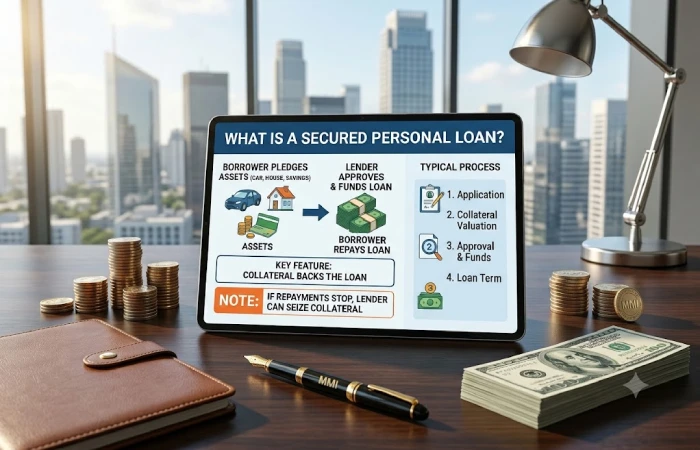
A secured personal loan is a loan which uses an asset to secure the loan. The lender then has the right to take possession of this asset if you don’t make the loan payments. This asset is called collateral.
Collateral could be in the form of a vehicle, savings account, fixed deposit or other form of acceptable security, depending on the provider of the loan.
As the lender has an asset as security, a secured loan will generally give you access to a lower interest rate or a larger borrowing limit than some unsecured options. This is subject to the type of collateral, borrower, credit profile and other factors.
What Is an Unsecured Personal Loan?
An unsecured personal loan doesn’t have an asset that must be put up as collateral. Generally, lenders will look at your credit score, income, employment, other debt obligations and your ability to repay when considering an application.
Unsecured loans may be more risky for lenders since they do not have any security they can claim if the borrower should default. This is why they might cost more in interest than other types of loan.
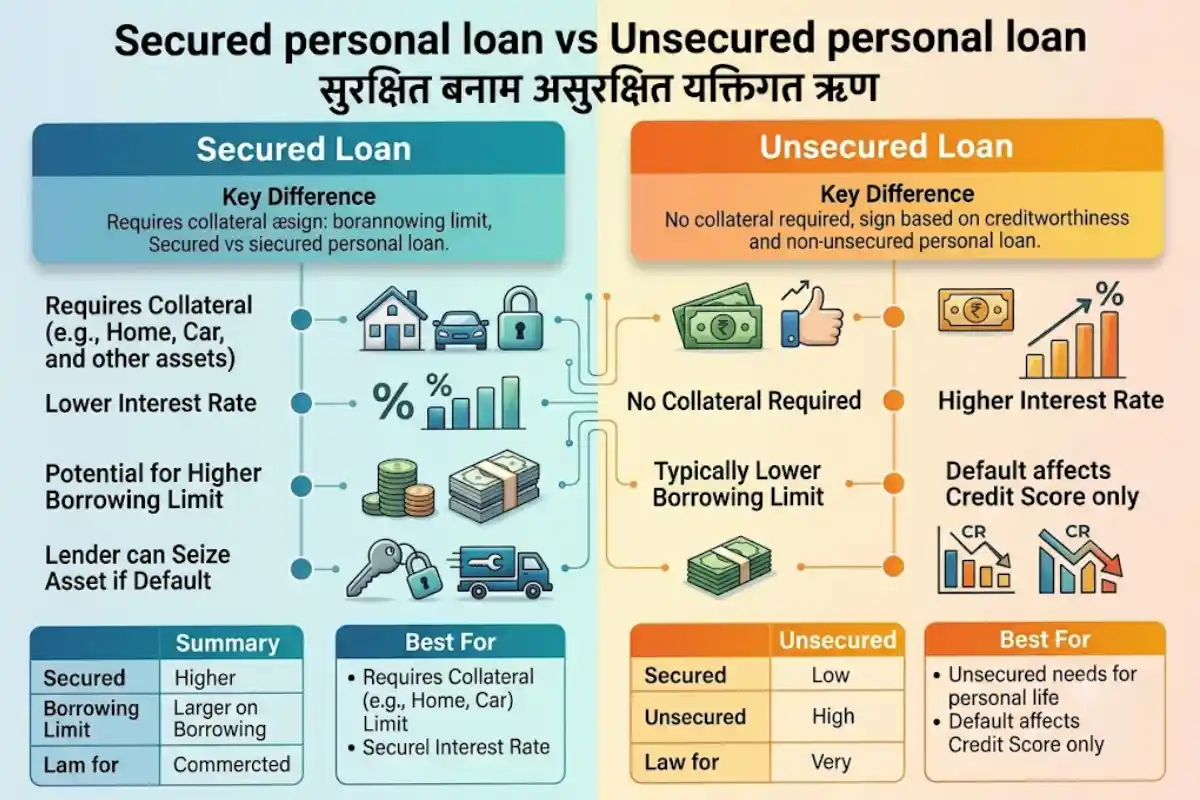
Secured Loan vs Unsecured Loan: Key Differences
The following table explains the main differences between secured and unsecured borrowing.
| Feature | Secured Loan | Unsecured Loan |
|---|---|---|
| Collateral | Required | Usually not required |
| Interest rate | May be lower | May be higher |
| Credit requirements | May be more flexible | Can be stricter |
| Loan amount | May be higher depending on collateral | Usually based on income and credit profile |
| Risk to borrower | Collateral may be at risk | No specific pledged asset |
| Approval | May involve collateral assessment | Primarily based on financial profile |
| Processing | May take longer if asset verification is required | Can be faster |
| Suitable for | Larger or lower-cost borrowing where collateral is available | Borrowers seeking borrowing without pledging assets |
Secured vs Unsecured Loans: How Do They Work?
The main difference between secured vs unsecured loans is the way in which the lender takes on risk.
Secured borrowing – An asset is pledged as the security for the loan, and the lender, if the borrower defaults under the terms of the agreement, can, in certain circumstances, take ownership of the asset.
Unsecured borrowing does not have an asset associated with it. In unsecured borrowing, the borrower simply has a pledge and the wherewithal to pay back the debt. Even if the borrower defaults, the use of collection and or other fees and credit-report consequences may occur, along with the possibility of litigation.
According to the Consumer Financial Protection Bureau (CFPB), secured loans use property as collateral, while unsecured loans do not use property as collateral.
Secured Personal Loan vs Unsecured Personal Loan
When comparing a secured personal loan vs unsecured personal loan, consider more than just the interest rate.
A secured loan may be attractive when a borrower has suitable collateral and wants potentially lower borrowing costs or a larger loan. However, putting an asset at risk is an important consideration.
An unsecured personal loan can be simpler because there is no collateral valuation or pledge. It may also provide faster access to funds, depending on the lender. The trade-off can be a higher interest rate or stricter eligibility requirements.
Cost and Risk Comparison
| Factor | Secured Personal Loan | Unsecured Personal Loan |
|---|---|---|
| Upfront collateral | Yes | No |
| Potential borrowing cost | Often lower, but varies | Often higher, but varies |
| Asset risk | Yes | No specific pledged asset |
| Credit impact from missed payments | Possible | Possible |
| Flexibility | Depends on lender | Often flexible in use |
| Documentation | May include asset documents | Mainly financial and identity documents |
Secured or Unsecured Personal Loan: Which Should You Consider?
Choosing a secured or unsecured personal loan depends on your financial position and priorities.
A secured loan may be worth considering if you have an acceptable asset to pledge and want to explore potentially lower rates or higher borrowing limits. You should be comfortable with the consequences of putting that asset up as collateral.
An unsecured loan may make more sense if you do not want to pledge an asset or do not have suitable collateral. Before applying, compare the annual interest rate, fees, repayment period, monthly payment, prepayment conditions, and total borrowing cost.
Secured Debt vs Unsecured Debt
The difference between secured debt vs unsecured debt extends beyond personal loans.
Secured debt is supported by collateral. Mortgages and many auto loans are common examples. Unsecured debt does not have a specific asset securing the debt. Credit cards and many personal loans are examples.
| Debt Type | Collateral | Example |
|---|---|---|
| Secured debt | Yes | Mortgage, auto loan |
| Unsecured debt | No specific collateral | Credit card, unsecured personal loan |
Collateral Loan vs Personal Loan
The phrase collateral loan vs personal loan can sometimes be confusing because a personal loan may be either secured or unsecured, depending on the product.
A collateral loan specifically involves an asset securing the borrowing. A personal loan describes the purpose or structure of the borrowing and does not automatically mean that collateral is required.
Therefore, check the individual loan agreement rather than assuming that every personal loan is unsecured.
Pros and Cons of Secured and Unsecured Loans
Secured loan advantages:
- May offer lower interest rates.
- Can potentially provide larger borrowing amounts.
- May be accessible to some borrowers with less-than-perfect credit.
Secured loan disadvantages:
- Requires collateral.
- The pledged asset can be at risk after default.
- Asset valuation and additional documentation may be require.
Unsecured loan advantages:
- No specific collateral is generally require.
- Application can be simpler.
- Borrowers do not pledge a particular asset.
Unsecured loan disadvantages:
- Interest rates may be higher.
- Credit and income requirements can be stricter.
- Missed payments can negatively affect your credit profile.
Final Thoughts
Before you borrow again, learn to distinguish secured and unsecured personal loan options. The main difference between a secured and unsecured personal loan is in the strength of the collateral and potentially lower costs, higher limits, and more flexible requirements of unsecured options.
Learn how a secured and unsecured loan differ when considering the total cost of the loan, the repayment term, any fees, the ability to qualify, and the level of financial risk you are willing to take. Make sure to read and understand the lender’s terms prior to accepting a loan.