

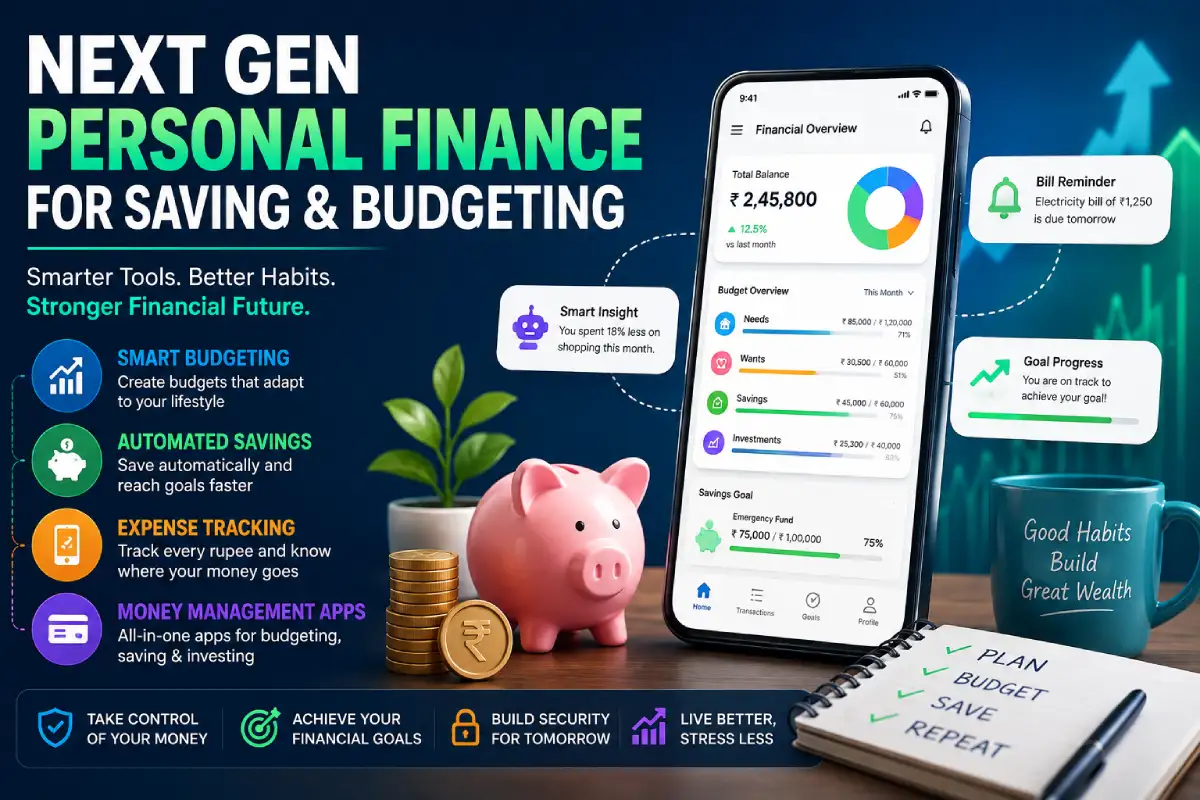
Next Gen Personal Finance for Saving & Budgeting

Today, your finances management should be far more advanced than using merely spreadsheets, notebooks and hand counting. Now; let’s look at, for saving and budgeting purposes. Next Gen Personal Finance for Saving & Budgeting includes digitally, smart & automatic personal finance and budgeting tool
Through mobile budgeting apps, automatic savings programs, and various other digital banking technologies, modern technology will provide users with information on their current financial status and how much money is needed.
This Article Belongs to personal Finance
What is Next Gen Personal Finance?
Next-generation personal finance mixes old budgeting practices with new digital capabilities. Instead of manually tracking each purchase, users can link financial accounts, classify spending, create saving goals, receive automated alerts, and set some automated features for managing your money.
The goal is simple: make good financial habits easier to maintain.
| Traditional Budgeting | Next Gen Personal Finance |
| Manual expense records | Automatic expense tracking |
| Paper or spreadsheets | Digital budgeting platforms |
| Manual transfers | Automated savings |
| Basic calculations | Real-time financial insights |
| Limited alerts | Personalized notifications |
| Fixed budgets | Flexible, data-driven budgets |
Smart Budgeting for Modern Money Management

Good budgeting is the practice of creating and following an expenditures budget informed by income, expenses, financial goals, and circumstances. Digital tools allow for analyses of an individual’s expenditures to pinpoint particular areas of overspending.
An example someone discovering that several small, everyday purchases are adding up to be a big part of monthly spending. This type of budget management tool could pinpoint these behaviors and make budget adjustments simpler.
A practical smart-budgeting approach is:
- Calculate monthly take-home income.
- List essential expenses.
- Identify discretionary spending.
- Set savings and debt-payment targets.
- Review spending regularly.
- Adjust the budget when circumstances change.
Automated Savings: Save Before You Spend
Automated savings can take out some of the work in terms of saving money. Depending on the financial services, you can be set up to have money transferred from your checking/spending account to your savings account on a regular basis.
Automation can be particularly beneficial; saving becomes more of a habit than something to consciously decide each month.
Let’s say someone wants to have $5,000 each month: They can set an automatic transfer to start shortly after their funds get distributed. Once continued contributions pile up, those payments create an emergency fund or assist them toward some other goal.
The automation has to suit a feasible budget. There has to be some money readily available to an individual to manage essential day-to-day expenses and emergency cash at all times.
Digital Budgeting and Money-Saving Apps
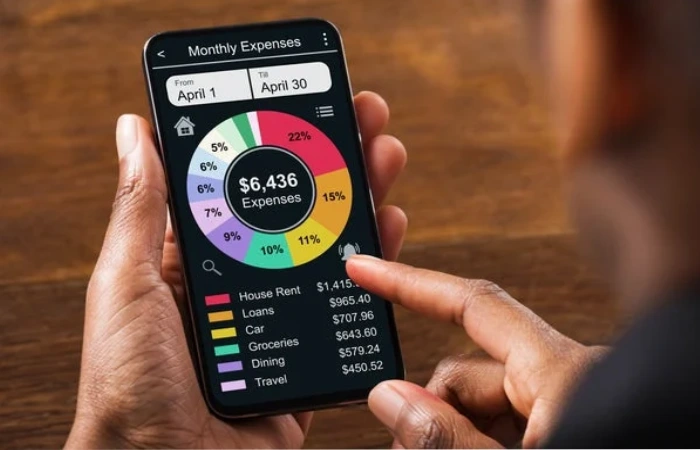
Financial information can be viewed in a unified location with digital budgeting. Depending on the platform, features may be available to track income, categorize transactions, set spending limits, and view the status of goals.
The money saving apps can offer reminders, spending analysis, savings challenge or individualized suggestions. Though each money saving app differs, checking the fee of each app, security, privacy policy, accessing account for money saving app before links to financial account is very necessary.
Useful Features to Compare
| Feature | Why It Matters |
| Budget creation | Helps establish spending limits |
| Automatic categorization | Reduces manual data entry |
| Savings goals | Makes progress easier to monitor |
| Spending alerts | Helps prevent overspending |
| Recurring transaction detection | Identifies subscriptions and regular bills |
| Reports | Shows spending patterns |
| Account synchronization | Can provide a consolidated financial view |
Expense Tracking Apps Make Spending Visible
Automated transaction monitoring is one of the most practical features of modern personal finance technology. Expense-tracking applications categories a transaction as you spend.
Rather than “Where did my money go,” you can check categories like the home, food, transport, fun, and subs etc and you can shop items.
Regular reviews can reveal:
- Unnecessary recurring subscriptions
- Increasing discretionary spending
- Categories exceeding the planned budget
- Opportunities to reduce expenses
- Progress toward monthly savings targets
The important point is that tracking should lead to action. Simply collecting financial data does not automatically improve financial health.
Automated Money Management
An automated management system of finances has the potential to bring together many habits of financially-related matters into one logical system. Users can automate payment of bills, transfers to savings, deposits to investments, notifications regarding financial status, etc.
A simple automated system could look like this:
Income → Essential expenses → Automated savings → Debt payments → Discretionary spending
This approach helps give every part of the monthly income a purpose.
But of course, the automated system will need to be reviewed at times. Income levels, expenses, subscriptions to services, interest rates on accounts, as well as investment objectives will fluctuate and an old automated system may no longer suit the person.
Personal Budgeting Tools for Different Goals
Not everyone needs the same financial tools. A student may primarily need expense tracking, while a family might need shared budgeting and bill management.
| User Goal | Helpful Tool |
| Control everyday spending | Expense tracking app |
| Build emergency savings | Automated savings |
| Reduce unnecessary purchases | Spending alerts |
| Manage household expenses | Shared digital budget |
| Monitor subscriptions | Recurring-payment tracking |
| Reach a specific savings goal | Goal-based budgeting tool |
How to Build a Next Gen Personal Finance System
You do not need dozens of apps to modernize your finances. A simple system can be highly effective.
Step 1: Understand your cash flow
Track monthly income and essential expenses.
The Consumer Financial Protection Bureau provides practical tools for setting savings goals, tracking income and expenses, managing bills, and creating a realistic cash-flow budget.
Step 2: Create realistic categories
Separate necessities from discretionary purchases.
Step 3: Set measurable goals
Instead of saying “I want to save more,” establish a specific monthly savings target.
Step 4: Automate where appropriate
Schedule savings and recurring payments when your cash flow allows.
Step 5: Track actual spending
Use digital tools to compare your real spending with your budget.
Step 6: Review monthly
Look for unnecessary expenses and adjust your targets.
Benefits and Limitations
| Benefits | Limitations |
| Saves time | Some tools charge fees |
| Makes spending easier to understand | Data accuracy can vary |
| Encourages consistent saving | Automation requires monitoring |
| Provides useful financial insights | Privacy considerations matter |
| Reduces manual calculations | Too many features can become confusing |
Is Next Gen Personal Finance Worth Using?
Most people find modern personal finance tools make budgeting and saving less of a hassle. Smart budgeting, auto saving, digital budgeting, money saving apps, tracking expense apps, and personal budgeting tools minimize the time required when compared to doing it themselves.
Still, technology is only a tool. The strongest results come from combining automation with realistic spending limits, regular reviews, responsible borrowing, and clear financial goals.
Final Thoughts
Next Gen Personal Finance for Saving & Budgeting is all about moving away from using paper and keeping track of your cash and becoming technologically competent with your spending habits. Used properly, this technology helps you track your expenses, save money on a consistent basis and stay on track with your financial aims.
The simplest possible system is usually not the complex one, and a basic blend of budgeting, tracking your expenses, setting up automated savings and routinely reviewing your financials could all be implemented to better manage your money on an everyday basis.