

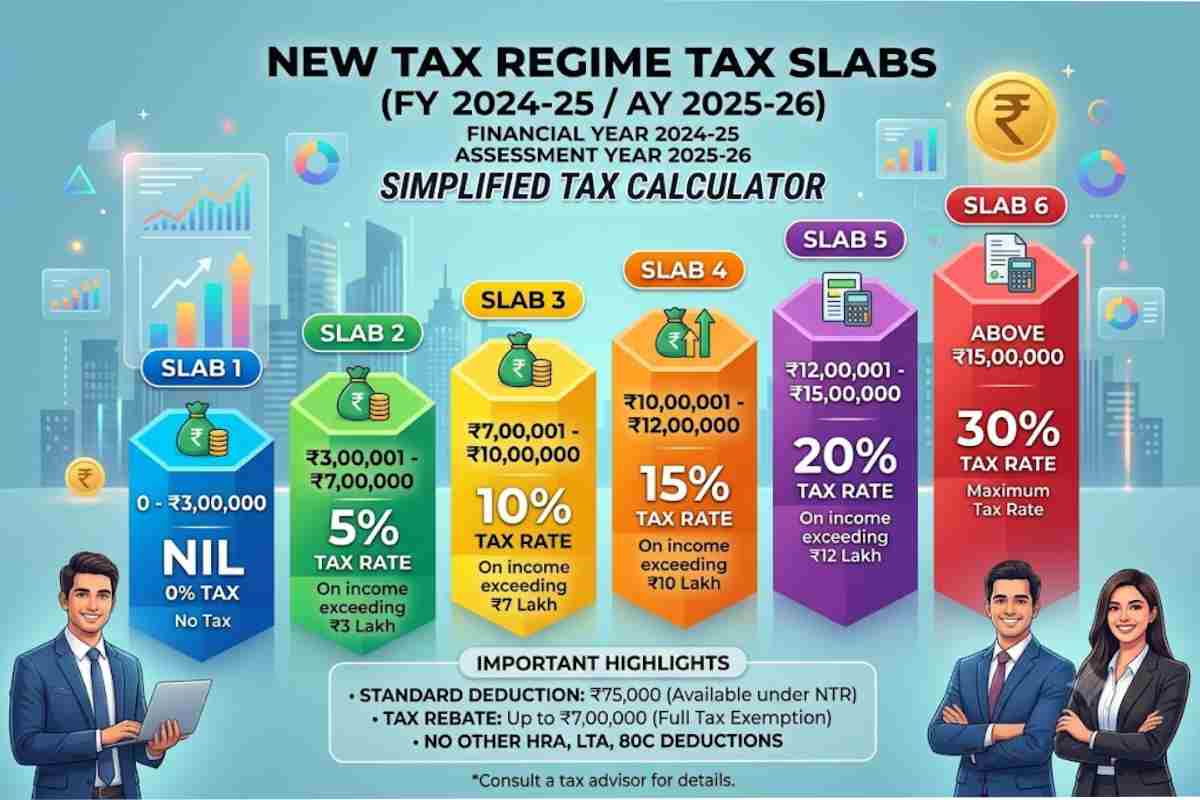
New Tax Regime Tax Slabs for FY 2026-27: Latest Income Tax Rates

Last Updated: September 14, 2026
Understanding the New Tax Regime Tax Slabs is crucial information for taxpayers as it helps in financial planning and calculating the amount of tax payable. The new regime section 115BAC has different slabs with which the taxpayers are required to pay tax at varying rates.
For FY 2026-27 (AY 2027-28), taxpayers need to verify the latest relevant provisions before filling the returns. At present, the income tax department has updated their the rules for the AY 2026-27 of the enhanced slab structure that was notified when the new regime was introduced.
This Article Belongs to Tax Tips
New Tax Regime Slabs
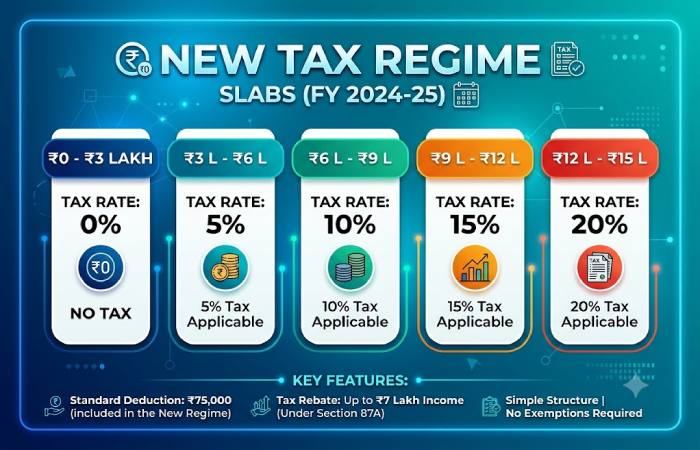
The new tax regime slabs are structured to provide lower rates across several income levels compared with the traditional tax structure. The applicable rates for individuals under the new regime are:
| Taxable Income | Tax Rate |
|---|---|
| Up to ₹4 lakh | Nil |
| ₹4 lakh – ₹8 lakh | 5% |
| ₹8 lakh – ₹12 lakh | 10% |
| ₹12 lakh – ₹16 lakh | 15% |
| ₹16 lakh – ₹20 lakh | 20% |
| ₹20 lakh – ₹24 lakh | 25% |
| Above ₹24 lakh | 30% |
These new income tax slabs apply progressively, meaning the applicable rate changes only for the portion of income falling within each slab. For the latest new tax regime tax slabs, taxpayers can refer to the official Income Tax Department guidelines, which provide the applicable rates and tax calculation details.
How the Income Tax Slab New Regime Works
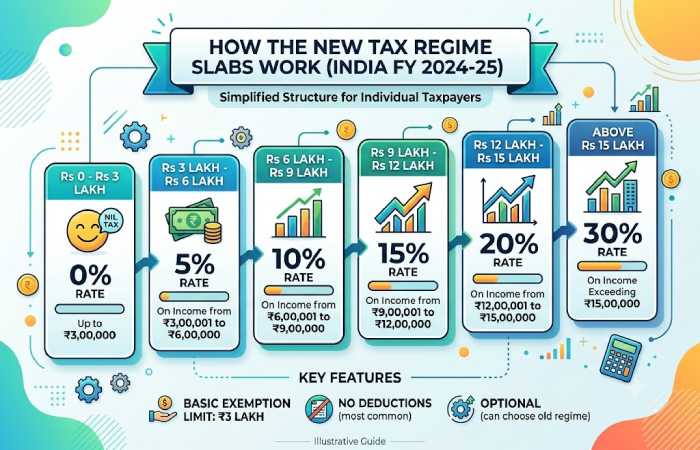
Under the income tax slab new regime, your entire income is not taxed at one single rate. Instead, different portions of taxable income are taxed according to the applicable slab.
For example, if your taxable income is ₹16 lakh, the first ₹4 lakh is taxed at 0%, the next ₹4 lakh at 5%, the following ₹4 lakh at 10%, and the next ₹4 lakh at 15%.
This progressive system makes it easier to understand how the new tax slab rates are calculated.
New Income Tax Slabs vs Old Regime
One of the major differences between the two systems is the number and level of tax slabs. The new regime generally uses lower rates but provides fewer deductions and exemptions than the old regime.
| Feature | New Tax Regime | Old Tax Regime |
|---|---|---|
| Basic exemption structure | Up to ₹4 lakh | Generally ₹2.5 lakh for individuals below 60 |
| Highest slab rate | 30% | 30% |
| Slab structure | More income bands | Fewer income bands |
| Deductions | Limited | Wider range of deductions |
| Tax calculation | Simplified | More deduction-based |
The Income Tax Department provides an online calculator that can compare tax liability under both regimes based on income and eligible deductions.
Income Tax Rates New Regime and Rebate
The income tax rates new regime should be considered together with applicable rebates and deductions rather than looking only at the headline slab rates.
For eligible taxpayers, the rebate under Section 87A can significantly reduce or eliminate the tax payable at lower income levels, subject to the applicable conditions. Therefore, taxpayers should calculate their final liability after considering the relevant rebate, standard deduction where applicable, and other permitted provisions.
The Income Tax Department’s slab information shows the revised new-regime structure and associated tax calculations.
What Deductions Are Available Under the New Regime?
The new regime is designed around lower tax rates and fewer exemptions. However, certain deductions and exemptions can still be available depending on the taxpayer’s circumstances.
For salaried individuals, the applicable standard deduction can reduce taxable income. Certain employer-related contributions and specified deductions may also remain available under the provisions of the tax law.
Because eligibility can depend on the nature of income and the specific provision being claimed, taxpayers should verify the current rules before filing.
Latest Income Tax Slabs: What Taxpayers Should Remember
The latest income tax slabs make the new regime relatively straightforward because taxpayers do not need to rely on as many deductions to determine their tax liability. However, choosing between the old and new regimes depends on individual circumstances.
A person with substantial eligible deductions under the old regime may find that option beneficial, while someone with fewer deductions may prefer the simplified new regime.
Taxpayers can use the official Income Tax Department calculator to compare both options before making a decision.
Conclusion
New Tax Regime Tax Slabs The new tax regime is presented as a progressive tax slabs from 0% (up to 4 lakh) to 30% (above 24 lakh). Under the new tax regime, the rates are comparatively lower with simple slabs and few or no exemptions/deductions.
It is advisable to check total taxable income, deductions, rebates and rule before returns have been filed. By reviewing the latest details on the official Income Tax Department portal, you can make sure to use the correct new slab rates.