


Credit Line on UPI Interest Rates and Charges: Complete Guide

Last Updated: September 16, 2026
A Credit Line on UPI allows eligible customers to use a pre-approved credit facility for payments through UPI. Instead of directly debiting a savings account, the transaction can be charged to the available credit limit. The facility is offered by participating lenders and is subject to their eligibility criteria, terms and pricing.
Understanding the UPI credit line interest rate, applicable fees and other charges is important before using the facility. UPI itself is a payment system developed by NPCI; the cost of borrowing comes from the lender providing the credit facility.
This Article Belongs to Credit Debt
What Is the UPI Credit Line Interest Rate?

The UPI credit line interest rate is the rate charged by the lending bank or financial institution on the amount utilised from the approved credit line. There is no single interest rate applicable to every UPI credit line.
The actual rate may depend on factors such as the lender, customer’s credit profile, sanctioned limit, product terms and repayment behaviour. Therefore, users should check the lender’s offer document or applicable terms before activating the facility.
Banks and lenders generally disclose applicable interest rates and charges as part of their lending terms. RBI guidance also emphasises transparency around interest rates and charges for credit facilities.
Credit Line on UPI Charges: What Can You Pay?
The cost of using a UPI credit facility can include more than just interest. Depending on the lender and product, customers may encounter processing fees, late-payment charges or other applicable charges.
| Charge type | What it means |
|---|---|
| Interest | Cost charged on the utilised credit amount |
| Processing fee | Fee that may apply when the credit facility is sanctioned or activated |
| Late payment charge | May apply if the outstanding amount is not paid by the due date |
| Penal charges | Additional charges may apply according to the lender’s terms |
| GST/taxes | Applicable taxes may be added to eligible fees or charges |
| Other service charges | May apply depending on the specific credit product |
The exact structure varies between lenders, so customers should not assume that every UPI credit line has the same fee schedule. RBI guidelines require regulated lenders to disclose the Annual Percentage Rate (APR), applicable fees and charges, and penal charges to borrowers. RBI Digital Lending Guidelines.
UPI Credit Line Fees vs Interest
It is useful to distinguish UPI credit line fees from interest. Interest is generally associated with the amount of credit that has been utilised, while fees may be charged for particular services or events.
For example, a lender could offer a credit line with no activation fee but charge interest on the utilised amount. Another lender could have a processing fee or other charges in addition to interest.
Before accepting an offer, check:
- Interest rate and how it is calculated
- Processing or activation fee
- Repayment due date
- Late-payment charges
- Penal charges, if applicable
- GST and other taxes
- Any minimum repayment requirement
How Is Credit Line Interest Calculated?
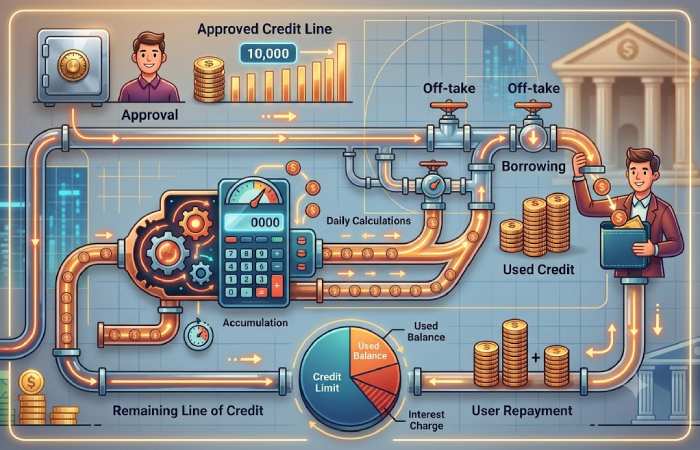
Suppose a customer uses ₹20,000 from a credit line. If the applicable annual interest rate were 18%, the simple annualised interest equivalent on ₹20,000 would be ₹3,600, before considering the lender’s actual calculation method, repayment timing, taxes or other charges.
The actual credit line interest charges can therefore differ depending on how long the amount remains outstanding and how the lender calculates interest.
Users should rely on the lender’s repayment schedule or statement rather than estimating the final cost solely from the annual rate.
UPI Credit Line Charges and Repayment
Repayment terms are particularly important because missing a due date can increase the overall UPI credit cost. A customer should check whether the lender requires full repayment, a minimum amount, or another repayment arrangement.
RBI has guidelines concerning transparency and the treatment of interest and charges for lending products. The applicable terms, however, depend on the specific credit product and lender.
Factors That Can Affect UPI Credit Cost
The total cost of using a credit line can depend on:
- Amount utilised: More borrowing can result in higher interest.
- Repayment period: Keeping the balance outstanding longer can increase interest.
- Interest rate: A higher rate increases borrowing costs.
- Fees: Processing or other applicable charges can add to the cost.
- Late repayment: Delayed payments may attract additional charges.
- Taxes: GST may apply to eligible fees and charges.
How to Check UPI Credit Line Interest Rates and Fees
Before using a credit line, open the relevant bank or lender’s official terms and review the pricing details. Look for the applicable interest rate, fee schedule, repayment conditions and charges for delayed payments.
It is also important to remember that UPI credit line charges are determined by the credit provider, not by UPI as a payment rail. NPCI operates UPI and publishes information about the UPI ecosystem, while individual financial institutions provide their products and applicable customer terms.
Conclusion
The Credit Line on UPI Interest Rates and Charges can vary significantly depending on the lender and the credit product. The UPI credit line interest rate is only one part of the overall borrowing cost. Processing fees, late-payment charges, taxes and other applicable fees may also affect the final amount payable.
Before activating a credit line, compare the complete pricing structure and understand the repayment schedule. This can help you estimate the UPI credit cost accurately and avoid unexpected charges.