


Best Next Gen Personal Finance Apps & Tools for Smarter Money Management

Money management has evolved far beyond traditional spreadsheets, notebooks or only reconciling bank statements at the end of each month. Next gen personal finance apps have been merging budgeting, planning and analysis of spending with automation, and increasingly artificial intelligence, to enable individuals to make better financial decisions.
Most well-built applications automatically aggregate all the different financial accounts, classify all expenses, recognize purchasing trends, and identify what could be done more effectively with personally customized advice. Whether an individual is attempting to take a hold of their spending habits in daily life, build savings, or planning for major life decisions and retirement savings accounts-digital financial management tools have become easier and more forward-thinking to utilize.
This Article Belongs to personal Finance
What Are Next Gen Personal Finance Apps?
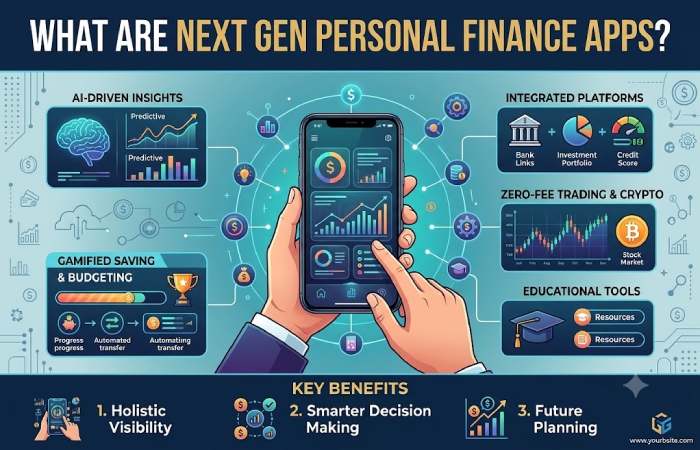
Next-gen personal finance apps are updated, software-based tools to automate financial management by leveraging automation, real-time information, and smarter financial analysis, among other mechanisms. Some financial applications go far beyond simple budget-making tools, tracking expenses and recording income.
Some of AI finance apps’ features include an assessment of spending habits, unusual transactions, financial recommendations, as well as of personal financial standing.
Key features often include:
- Automated expense categorisation
- Budget creation and tracking
- Bank and account synchronisation
- Savings and financial goals
- Spending insights
- Investment tracking
- Bill and subscription monitoring
- AI-powered financial guidance
Best Personal Finance Apps & Tools
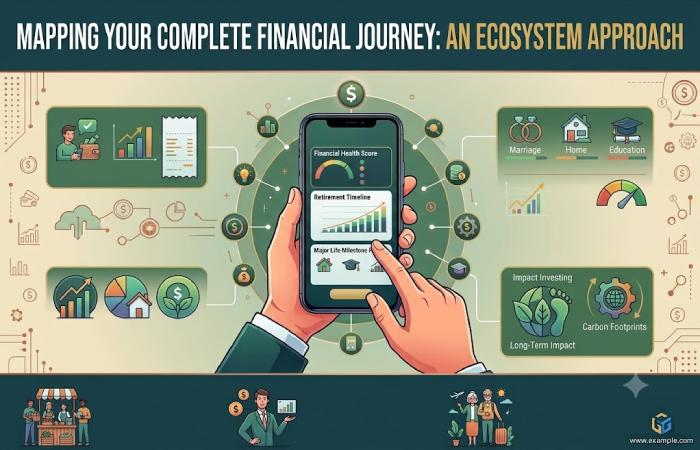
Which app right for you depends on your financial goals and what you want to do: Some are ideal for in depth budgets, others for investments, saving or comprehensive money management
| App/Tool | Best For | Key Strength |
|---|---|---|
| YNAB | Detailed budgeting | Zero-based budgeting |
| Monarch Money | All-in-one finance management | Net worth and financial dashboards |
| Empower | Investment tracking | Portfolio and net-worth monitoring |
| PocketGuard | Spending control | Available-to-spend insights |
| Goodbudget | Envelope budgeting | Simple manual budgeting |
| Rocket Money | Subscription management | Recurring expense tracking |
| Quicken Simplifi | Overall money management | Spending and cash-flow visibility |
1. YNAB
YNAB, which stands for ‘You Need A Budget’ is one of the most prominent modern-day budgeting applications. It requires that all of your current disposable funds are allocated to your specific needs, rather than following and accounting for what you spent, after the money has already been accounted for.
It can be particularly useful for people who want greater control over monthly spending and savings.
2. Monarch Money
Monarch Money functions as a dashboard. You are able to import financial data, track your spending, view your budgets, keep up with your investment portfolio, and check on your net worth-all from a single page.
Being able to view all of these areas from one page can be especially helpful when your household has many financial accounts.
3. Empower
Empower is particularly useful for people who want to monitor investments and overall wealth. In addition to budgeting-related information, its tools can provide a broader picture of assets, liabilities and net worth.
It is therefore more suitable for users interested in combining money management apps with investment tracking.
4. PocketGuard
PocketGuard’s purpose is to simplify how users decide the amount they can safely afford to spend after factoring in bills, goals, etc.
The straightforward philosophy should appeal to users who struggle with complicated and complex budgeting rules.
5. Goodbudget
The concept of the envelope budgeting system, used conventionally, is now available in digital form. Goodbudget allocates money for various expenditures and one can get a detailed tracking report.
It is a good option for people who prefer a simple and structured budgeting method.
6. Rocket Money
Rocket Money’s strengthslie primarily in ongoing costs and subscriptions, which it excels at helping users track down and comprehend.
This can be a useful addition to more traditional budgeting methods for those who have numerous online or ongoing expenses.
7. Quicken Simplifi
Quicken Simplifi is a feature-rich budget tool that can help users organize their income, cash flow, spending, savings and more. Users seeking an easy way to see where their money is going may enjoy Simplifi for its strong visibility feature.
Comparing Next Gen Finance Apps
Not every app needs advanced AI to be useful. The most important consideration is whether its features match your financial objectives.
| Feature | Traditional Budgeting | Next Gen Finance Apps |
|---|---|---|
| Expense tracking | Manual/common | Often automated |
| Account connections | Limited | Common |
| Spending insights | Basic | Advanced analytics |
| AI assistance | Rare | Increasingly available |
| Goal tracking | Basic | More personalised |
| Investment visibility | Limited | Often integrated |
| Automation | Limited | Stronger |
How AI Finance Apps Are Changing Money Management
The use of artificial intelligence is the most revolutionary element of the recent surge of innovation in digital finance products. Instead of every user having to make the connection with the finances themselves and wade through all the data, artificial intelligence can recognise trends in the users transactions and provide them with some information in relation to their finances.
For example artificial intelligence can determine that dining at restaurants has steadily increased for a number of months or that there are many recurring payments which should perhaps be highlighted.
It is worth remembering however that artificial intelligence advice should just be treated as guidance and a source that can help to take a number of decisions but it is certainly no excuse not to investigate further yourself.
Choosing the Right Digital Finance Tool
When comparing the best personal finance apps, consider these factors:
Budgeting method: Choose an app that matches how you naturally manage money.
Account connectivity: Check which banks, cards and financial institutions the platform supports.
Security: Review encryption, authentication and data-sharing policies before connecting financial accounts.
Cost: Some advanced features require a subscription, so compare the price with the value you expect to receive.
Financial goals: If your priority is investing, look for strong portfolio tools. If it is controlling spending, prioritise budgeting and cash-flow features.
The Future of Personal Finance
Consumers could find future personal finance services more tailored and automated: in addition to reporting what has happened, future systems will assist individuals in what they should do next.
AI-driven recommendations, automation savings, proactive cash-flow forecasts and customized financial planning will enable more forward-thinking digital money management.
However, the risks over privacy and data security must be addressed, as well as potential errors in automatic recommendations.
Final Thoughts
Optimal next gen finance apps can distill complex financial data into useable, actionable plans. From YNAB’s approach to budgeting through Rocket Money’s subscription tracking to Empower’s detailed investment data-driven approach, there’s often an application for different aspects of finances.
Don’t necessarily choose the app with the most comprehensive list of features over the app that makes the most sense with regards to personal financial needs, habits, and ease of use. Integrated with your money use and applied on an ongoing basis, new budget and financial applications offer more effective methods of daily money management as well as support for the future of financial planning.