

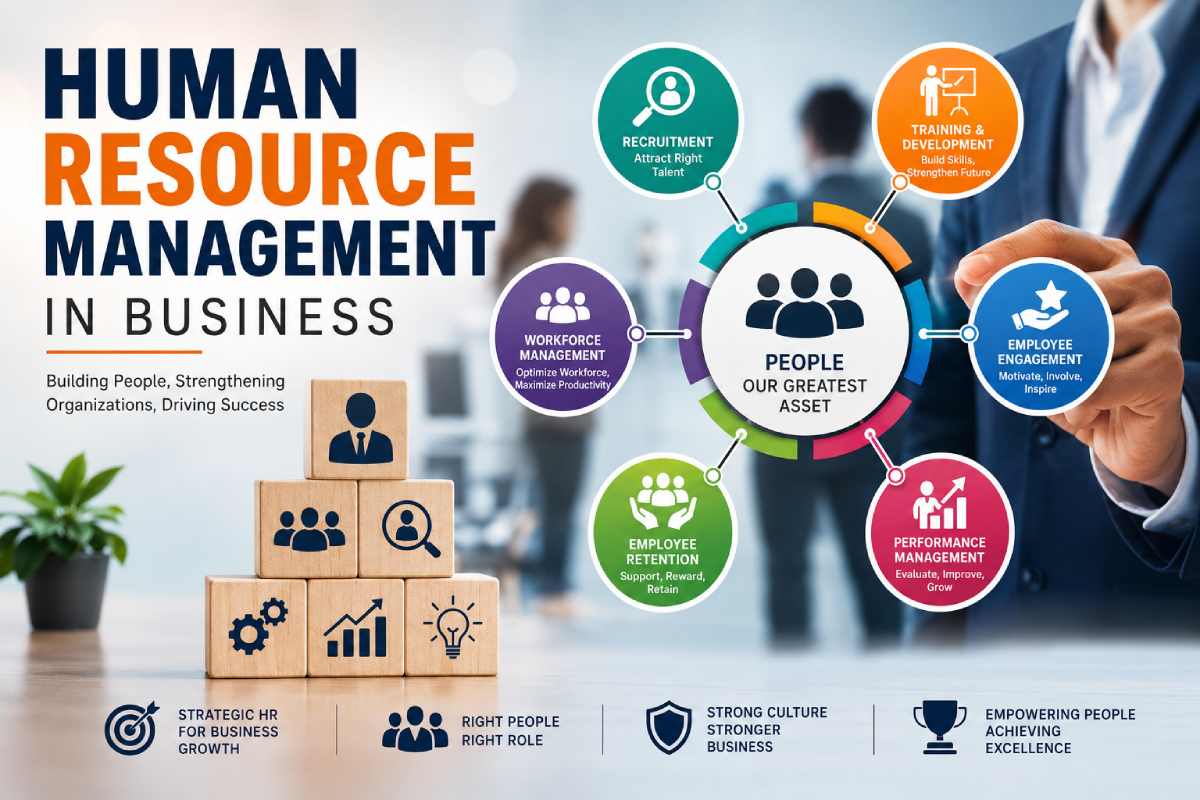
Human Resource Management in Business: A Complete Guide to Building a Productive Workforce

Last Updated: August 24, 2026
Human resource management is the core and primary business activity that ensures the success and long-term future of any organization. Since the establishment of a company of any size, human resources are very critical to make any operation to success. This practice of managing human resource effectively will make sure a business to acquire people that best fit the skills and roles, make them skilled to do well at their jobs, keeping them happy and contented and create a work-life balance environment.
The focus of the practice is on managing, and thus controlling, the workforce in ways which will aid the organization to attain its strategic objectives and goals. Many modern businesses are seeing HR as much more than the administrative staff; the HR team now actively leads in strategic planning for staffing needs, workforce development, talented person acquisition, compliance and the general overall development of the enterprise.
If a corporation prioritizes and strategically plans employee management, it is often a good way to foster worker motivation and workforce management, enhance employee performance and productivity, and diminish the number of those who resign, so, enhancing overall business operations. It does not matter the extent of the business – startup, SME or global company; knowledge of how to Manage human resource management for any business would have long way in creating an adaptable, inspired and productive business workforce for the ever-changing market and industrial conditions.
This Article is the part of Business Planning
What is Human Resource Management?

Human resource management (HRM) is defined as the planned approach for recruitment and management of employees and the implementation of an organizational process that works towards and follows organizational employee behaviors, and helps to maintain workplace productivity, improve workplace climate and morale of the organization.
The main goal of human resources management is to optimize employee performance and contribute to overall organizational goals by ensuring that the employees of the organization will provide value.
Core Objectives of HR Management
| Objective | Description | Business Impact |
| Recruitment | Hiring qualified candidates | Better workforce quality |
| Employee Development | Continuous learning and training | Higher productivity |
| Performance Management | Evaluating employee performance | Improved efficiency |
| Employee Relations | Maintaining positive workplace culture | Better engagement |
| Legal Compliance | Following labor laws and regulations | Reduced legal risks |
| Compensation Management | Managing salaries and benefits | Employee satisfaction |
Why Human Resource Management is Important in Business
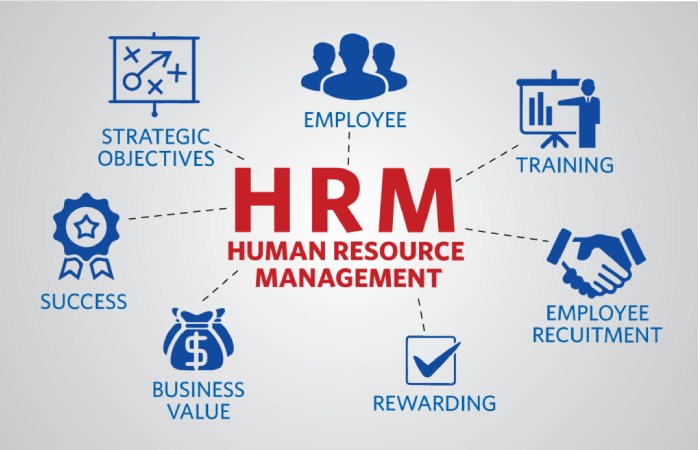
Growing companies are about people. And good HR practices put the best, most talented, and most qualified individuals in position, at precisely the correct moment.
Some key benefits include:
- Increased employee productivity
- Better employee engagement
- Improved organizational culture
- Reduced employee turnover
- Stronger leadership development
- Better compliance with employment regulations
- Enhanced business performance
Companies that clearly outline how to develop HR policy will also experience greater ease when they decide to lure best talent and want their business to exist for an eternity.
Key Functions of Human Resource Management
Human resource management comprises various interlocking functions and processes aimed to achieve successful business operations.
1. HR Management
HR management care all administrative and strategic work for an employee HR management policies include Workforce Planning, Payroll Management, Performance appraisal, policy formulation and compliance management. A sound HR management practices will ensure that all department of a business maintain the standards while the employees are aware about the same.
2. Employee Management
Employee management involves managing an individual throughout their entire career in the company.
This includes:
- Goal setting
- Performance monitoring
- Employee feedback
- Conflict resolution
- Career development
- Recognition programs
Good management leads to motivated and productive staff members, driving employees to work their best.
3. Workforce Management
Workforce management is about strategizing and arranging your staff and other workforce-related assets and tools to effectively meet business needs.
Components of Workforce Management
| Workforce Activity | Purpose | Result |
| Workforce Planning | Forecast staffing needs | Better resource allocation |
| Scheduling | Optimize employee shifts | Increased efficiency |
| Attendance Tracking | Monitor employee attendance | Reduced absenteeism |
| Productivity Analysis | Measure employee output | Improved performance |
| Capacity Planning | Match workforce to workload | Cost optimization |
Employees will maintain productivity whilst a healthy workforce will also ensure cost control for businesses.
4. Talent Management
The practice of talent management is centered around three key aspects attracting, developing, and retaining high performing individuals.
It includes:
- Identifying future leaders
- Employee development programs
- Leadership training
- Succession planning
- Career progression opportunities
Organizations that can execute a good talent management plan have a healthier pipeline for future leaders and happier employees.
Recruitment and Training
Recruitment and training is the first building blocks for sound human resource management. It ensures the organization gets the right candidate that will help achieving it set of goals and match the organization culture. This structured process ensures less number of hiring mistakes, better retention rate in the organization over the longer period of time. It has starts the from the time an employee is selected and extends all along his or her working life.
Recruitment Process
| Stage | Description |
| Job Analysis | Identify job requirements |
| Job Posting | Advertise available positions |
| Candidate Screening | Review resumes and applications |
| Interviews | Evaluate skills and experience |
| Selection | Choose the best candidate |
| Onboarding | Introduce employee to the organization |
Benefits of Employee Training
| Training Benefit | Business Advantage |
| Skill Development | Higher productivity |
| Better Quality | Reduced errors |
| Employee Confidence | Increased engagement |
| Leadership Growth | Strong future managers |
| Technology Adoption | Faster digital transformation |
Continuous learning ensures employees remain competitive in rapidly changing industries.
Employee Retention Strategies
Hiring talented employees is only the beginning. Retaining them is equally important.
High employee turnover increases recruitment costs, disrupts productivity, and affects company morale.
Successful employee retention strategies include:
- Competitive salaries and benefits
- Career advancement opportunities
- Recognition and reward programs
- Flexible work arrangements
- Employee wellness initiatives
- Strong leadership support
- Positive workplace culture
Employees are more likely to stay with organizations that invest in their professional and personal growth.
Technology in Human Resource Management
Today, new-fangled technology is streamlining mundane administration for HR professionals.
Popular HR technologies include:
| HR Technology | Purpose |
| HR Information Systems (HRIS) | Employee data management |
| Applicant Tracking Systems | Recruitment automation |
| Learning Management Systems | Employee training |
| Payroll Software | Salary processing |
| Performance Management Software | Employee evaluations |
| Employee Self-Service Portals | HR support and communication |
HR departments can utilize Automation to shift the focus away from tedious, time-consuming administrative duties towards more meaningful, strategic endeavors.
Challenges in Human Resource Management
Even with all of our advancements, there are a variety of ongoing struggles for HR departments.
| Challenge | Possible Solution |
| Talent Shortage | Improve employer branding |
| Employee Burnout | Promote work-life balance |
| High Turnover | Strengthen retention programs |
| Skills Gap | Continuous employee training |
| Remote Workforce | Digital collaboration tools |
| Compliance Issues | Regular policy updates |
Addressing these challenges proactively helps organizations remain competitive.
Best Practices for Effective Human Resource Management
The HR practices of thriving organizations lead to high job satisfaction and high levels of overall performance of employees.
Some best practices include:
- Develop clear HR policies.
- Invest in recruitment and training.
- Encourage open communication.
- Recognize employee achievements.
- Conduct regular performance evaluations.
- Offer career development opportunities.
- Promote diversity and inclusion.
- Use HR analytics for decision-making.
- Maintain compliance with labor regulations.
- Continuously improve workplace culture.
Future Trends in Human Resource Management
The future of HR management is technology and employee experience and data analytics.
Emerging trends include:
| Trend | Expected Impact |
| Artificial Intelligence | Smarter recruitment |
| People Analytics | Better HR decisions |
| Hybrid Work Models | Flexible workforce |
| Employee Well-being | Improved retention |
| Skills-Based Hiring | Better talent acquisition |
| Digital Learning | Continuous workforce development |
Those businesses that adapt to these innovations are going to be more in a position to attract top talent.
Strong human resource strategies also depend on effective budgeting, payroll planning, and resource allocation. financial management helps businesses align workforce decisions with long-term financial goals.
Conclusion
Human resource management goes way beyond simply finding and paying your employees. It is a strategic position that affects business success, worker fulfillment and also future organization growth. Through hr management, staff administration, labour power management and skill administration companies will certainly build high-performing workforce that are able to accomplish business goals. If a organization puts cash into working with, education, employee preservation initiatives and also state-of-the-art hr software program, it will build a strong work pressure that is ready to meet the demands of the future. Organizations that consider people important as workplaces develop will have a severe competitive edge.