

How Does a Secured Personal Loan Work? A Complete Guide

If you need a large sum of money for an important purchase, a personal loan can help you get your hands on the cash quickly. Not all personal loans are unsecured, some are secured and you need to put up a good of collateral.
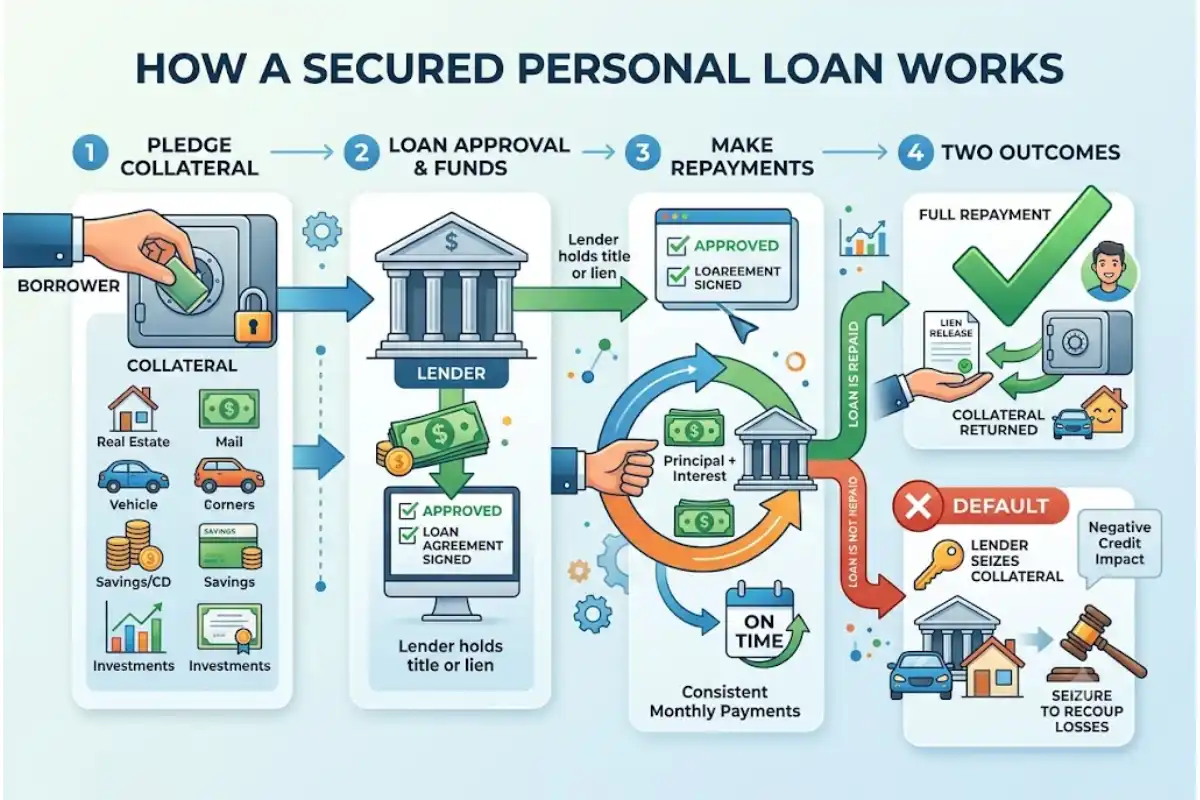
How does a secured personal loan work? Essentially, the loan lender gives you money in return for a legal right to a set asset. As long as you keep up the repayments on the loan, you’ll be able to keep the asset but if you don’t repay the loan, the lender can seize and sell the asset to cover the debt.
This Article Belongs to Personal Loans
What Is a Secured Personal Loan?
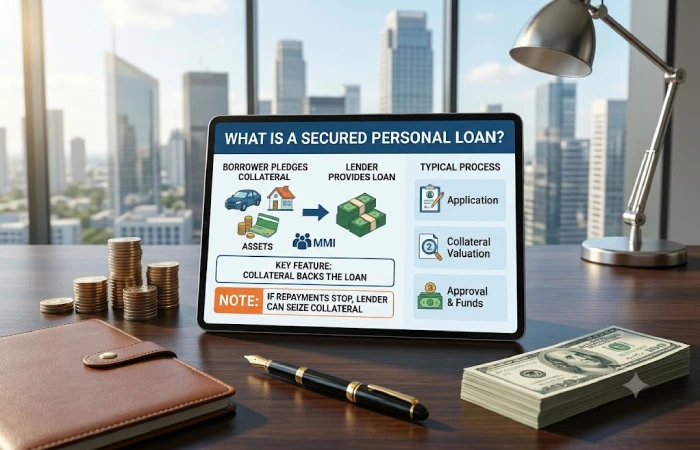
A secured personal loan explained simply is a loan backed by an asset owned by the borrower. This asset is called collateral.
What is the meaning of a secured loan? This is also the different meaning of an unsecured personal loan. For an unsecured loan, the lender would not normally ask for an asset to secure the borrowing. For a secured loan, the lender is the owner of the collateral.
Common forms of collateral can include:
- Savings or fixed deposits
- Vehicles
- Property or other real estate
- Investments or other eligible assets
The exact assets accepted depend on the lender and local lending rules.
How Secured Loans Work
Understanding how secured loans work involves several basic steps:
- You apply for the loan: You provide personal, financial and employment information to the lender.
- You offer collateral: The lender assesses whether the proposed asset is acceptable and determines its value.
- The lender reviews your application: Your income, credit history, existing debts and the value of the collateral may be considered.
- Loan approval: If approved, the lender provides the agreed loan amount.
- You make repayments: You repay the principal and interest according to the loan schedule.
- The security is released: After the loan is fully repaid, the lender’s claim over the collateral is generally removed according to the agreement.
What Is Secured Loan Collateral?
Examples of collateral for secured loans A secured loan collateral is an asset that acts as security for the lender. It cushions the potential loss faced by a loan lender when the borrower stops making payments.
For instance, if you secured a personal loan against a qualifying asset valued at $20,000, the lender may be willing to offer you a loan equivalent to the value of the asset, subject to your financial circumstances and the lender’s lending requirements.
Collateral does not normally mean that the lender owns it in the first place. The lender has an interest in the asset until the debt is paid off.
The collateral does not normally mean that the lender automatically owns the asset. Instead, the lender has a legal interest in the collateral until the debt is satisfied.
This is a particularly relevant source because the CFPB specifically discusses security interests and how collateral is identified in credit agreements.
Personal Loan With Collateral vs. Unsecured Loan
A personal loan with collateral can have different requirements and risks compared with an unsecured loan.
| Feature | Secured Personal Loan | Unsecured Personal Loan |
|---|---|---|
| Collateral | Usually required | Usually not required |
| Lender’s security | Backed by an asset | Primarily based on borrower’s creditworthiness |
| Risk to borrower | Collateral may be at risk if payments are not made | No specific pledged asset, but other collection consequences may apply |
| Loan approval | May consider collateral and finances | Stronger emphasis on credit and income |
| Interest rate | May be lower in some cases | May be higher depending on borrower and lender |
| Loan amount | May be influenced by collateral value | Generally based on financial profile and lender limits |
Actual rates, fees and eligibility requirements vary between lenders.
Benefits of Secured Borrowing
Secured borrowing can offer several potential advantages:
Potentially Lower Interest Rates
Because the lender has collateral, it may consider the loan less risky than comparable unsecured borrowing. This can sometimes result in a lower interest rate.
Higher Borrowing Limits
Some lenders may offer larger loan amounts when an acceptable asset secures the loan. However, the amount depends on the collateral, income, credit profile and lender policies.
Easier Qualification for Some Borrowers
A borrower who would not be eligible for some unsecured credit may potentially be eligible for secured borrowing, as collateral provides extra security to the lender.
Risks of a Secured Personal Loan
The biggest danger is the collateral. Defaulting on the loan or nonpayment could give the lender a claim to the property, whether it’s through repossession or other means, in the absence of a lien or other legal document, which may vary by state.
You should also consider:
- Interest and origination fees
- Early repayment charges, if applicable
- The total cost over the full loan term
- Whether the monthly payment fits your budget
- What happens to the collateral if you default
A secured loan can therefore reduce the lender’s risk, but it does not eliminate the borrower’s repayment obligation.
Is a Secured Personal Loan Right for You?
You may want to think about a secured personal loan, if you are seeking a loan and you are prepared to pledge a qualifying asset as security. Always compare the annual percentage rate, fees, repayment period, total repayment and collateral needed before you apply.
Most importantly, understand what happens if you cannot repay. The potential loss of an important asset can make a secured loan considerably different from ordinary unsecured borrowing.
Final Thoughts
How does a secured personal loan work? It’s simple: you borrow funds and provide an acceptable asset as collateral for the debt. You make regular payments and once the loan is repaid, the lender’s interest in the security is typically released.
A secured personal loan can offer access to financing and, in some circumstances, more favourable terms. However, borrowers should carefully evaluate the total cost and the risk associated with their secured loan collateral before signing an agreement.