

Investing in Local Economies: A Complete Guide to Building Stronger Communities and Sustainable Growth

Last Updated: August 24, 2026
Introduction
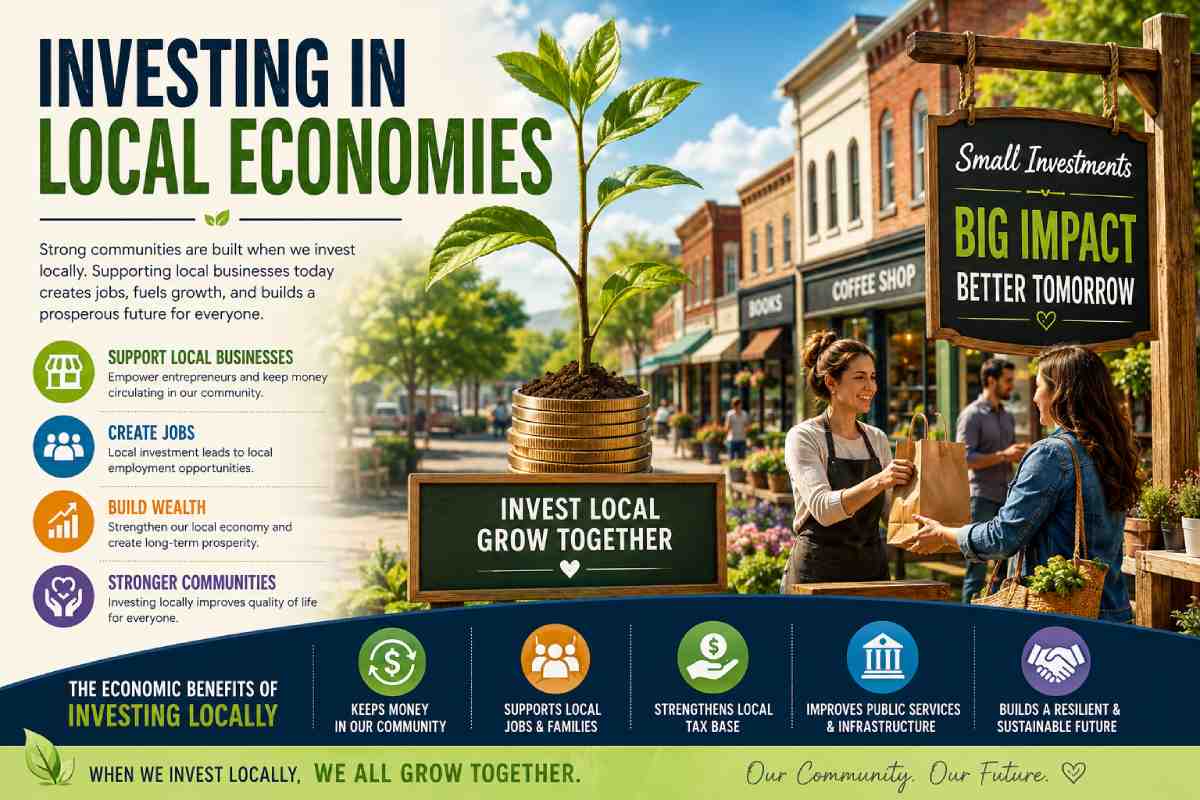
Investment in local economies has become a primary objective for individuals, companies and governments aiming for sustained economic growth. Investing locally, instead of solely concentrating capital into large, global companies helps foster thriving communities, generate jobs, and create wealth at a local level. Actions ranging from supporting businesses, community investment vehicles, and community spending help foster economic security and community wealth.
Economies at a local level grow and succeed through local residents, entrepreneurs, and investors engaging in and benefiting from the economic health of their local communities. Local money, circulated multiple times through a community, will benefit employment, local suppliers, public services and infrastructure. Given current global uncertainty, as well as global supply chain issues affecting markets world-wide, investing in local economies provides sustainable growth and stability at the community level.
The U.S. Small Business Administration notes that small businesses comprise large percentage of economic activity, and provide a wealth of job creation benefits from investment through local investment opportunities.
Even the basics interaction can go a long way for smaller businesses with smaller marketing budgets.
This article is a part of Business Ideas
Why Investing in Local Economies Matters

The economy of our country grows on the foundation of the local economy. We depend on local business, local entrepreneurs, and local associations for jobs, products and services, and taxes for schools, roads and other facilities. If the consumers use local businesses, money stays local. There is a multiplier effect because spending within the local economy creates further local economic activity with employee income, local suppliers, and reinvestment in the community. Moreover, local investment promotes businesses that know the customers and region well, building customer loyalty and improving quality, enhancing community involvement.
Exploring local business banking solutions can help entrepreneurs secure funding and manage their finances more effectively.
Key Benefits of Local Economic Investment
| Benefit | Impact on Community |
| Job Creation | Supports local employment opportunities |
| Economic Stability | Reduces dependence on external markets |
| Wealth Retention | Keeps money circulating locally |
| Entrepreneurship Growth | Encourages innovation and business development |
| Stronger Communities | Enhances social and economic connections |
| Increased Tax Revenue | Funds public services and infrastructure |
Investing in Small Businesses

Another approach that helps the local economy is to invest in local small businesses. These kinds of businesses may have difficulty accessing capital from traditional financial institutions, community support is very valuable for these local firms. Small businesses’ investment could have many forms, from direct equity investment to local business partnerships, local crowdfunding, purchasing goods and services of local companies. It is often convenient for investors to invest in local businesses, because investors can observe and evaluate the whole process of local business management, predict the local needs and have directly contact with local businessmen.
Common Ways to Invest in Small Businesses
| Investment Method | Description | Risk Level |
| Equity Investment | Ownership stake in a business | High |
| Business Loans | Lending capital with repayment terms | Moderate |
| Crowdfunding | Pooling investments with others | Moderate |
| Revenue Sharing | Receiving a portion of future revenue | Moderate |
| Community Funds | Investing through local development funds | Low to Moderate |
Financial assistance to small business through programs such as Federal Reserve Community Development Programs is stressed in community development.
Community Investment Opportunities
Investment in your local community provides avenues for citizens to invest in ventures and enterprises that improve the community directly. Investments in communities are primarily based on economic development, affordable housing, renewable energy, local agriculture, and infrastructural developments.
Instead of investing for optimum monetary returns like conventional investments, investments in communities often weigh between monetary benefits and social good. In a community investment, an investor has the potential of contributing positively towards the living standards of a community while achieving satisfactory financial returns on his/her investments.
Examples include:
- Community development financial institutions (CDFIs)
- Local investment cooperatives
- Community bonds
- Real estate development projects
- Renewable energy initiatives
- Agricultural cooperatives
These opportunities enable investors to align their financial goals with community development objectives.
Local Business Investment Guide
Investing in our local economy should be intentional. It takes foresight and strategic action to create the businesses that benefit the entire community while considering financial realities and risk.
Steps for Evaluating Local Investment Opportunities
| Step | Key Considerations |
| Research the Business | History, reputation, and management team |
| Analyze Financials | Revenue, profitability, and cash flow |
| Evaluate Market Demand | Customer base and growth potential |
| Understand Risks | Competition and economic factors |
| Review Legal Structure | Ownership and regulatory compliance |
| Monitor Performance | Ongoing business updates and metrics |
Combining finance knowledge with community awareness is key to successful local investing. Smart investors can recognize local growth opportunities that national organizations might not see, and entrepreneurs in a community are generally more interested in investors that can offer business knowledge, guidance, and networks, not just cash.
Economic Benefits of Local Spending
Local spending is very important to community economic development. In numerous studies it has been found that dollars spent locally do a better job of staying within the community compared to money spent at national chains or online outlets. When you buy from local business they are likely to buy from local workers, and buy local suppliers and put their money back into the community.
Comparison of Local vs. Non-Local Spending
| Factor | Local Spending | Non-Local Spending |
| Community Job Support | High | Lower |
| Local Tax Contribution | High | Moderate |
| Supplier Relationships | Local-focused | Global-focused |
| Economic Multiplier Effect | Strong | Weaker |
| Community Engagement | High | Lower |
The Organisation for Economic Co-operation and Development (OECD) acknowledges that strong local businesses improve regional competitiveness and development in the long run.
Furthermore, local spending supports community identity as it sustains unique local business and institutions and the local service providers.
Explore this detailed comparison of local business support methods to understand which options provide the greatest value to your community.
Community Wealth Building
Community wealth building: This economic development strategy aims to generate and preserve wealth within the local community. Instead of allowing financial capital to flow out, this model centers on increasing local control and ownership.
Key principles include:
- Supporting locally owned businesses
- Encouraging employee ownership models
- Promoting cooperative enterprises
- Investing in community assets
- Expanding access to capital
- Building inclusive economic opportunities
Community wealth building seeks to ensure that economic growth benefits a broad range of residents rather than concentrating wealth among a small group of stakeholders.
Core Components of Community Wealth Building
| Component | Purpose |
| Local Ownership | Retain profits within communities |
| Workforce Development | Improve skills and employment |
| Access to Capital | Support business expansion |
| Cooperative Models | Share ownership and benefits |
| Inclusive Procurement | Prioritize local suppliers |
| Asset Development | Build long-term community resources |
This approach has gained attention worldwide as communities seek more equitable and sustainable economic development strategies.
Challenges of Investing in Local Economies
Though local investing has many advantages, potential drawbacks for the investor can include less operational experience, less liquidity and susceptibility to greater volatility for small businesses.
Other challenges include:
| Challenge | Potential Impact |
| Limited Financial Data | Harder investment evaluation |
| Higher Business Failure Rates | Increased investment risk |
| Lower Liquidity | Difficult to exit investments |
| Market Concentration | Dependence on local conditions |
| Regulatory Complexity | Additional compliance requirements |
Despite these risks, diversification, due diligence, and long-term investment perspectives can help mitigate potential losses.
Future Trends in Local Economic Investment
Technology provides local investors with new ways to participate in local economy through online crowdfunding sites, digital markets and community investment networks. The opportunities for local people to support local businesses were newly generated by this technology.
Emerging trends include:
- Impact investing
- Sustainable local development projects
- Green energy initiatives
- Community crowdfunding
- Local venture capital networks
- Employee-owned business models
In the future, I believe that it is likely to see local economic investment being prioritized even more highly in development strategies. Consumers are developing greater social conscience.
Conclusion
Investing in local economies is far more than a purely financial investment; it is about committing to helping build wealth in a community, creating jobs, and building a growing, sustainable economy. Investors help to strengthen local economies through Investing in local businesses, Participating in community investment projects, Creating local spending and Shopping locally to support and create wealth locally. Local investment in a local economy is something that will benefit not just immediate monetary return, but provide opportunities for quality of life, future growth and for local businesses and innovation. When invested, funds in local economies create wealth for the investor.