

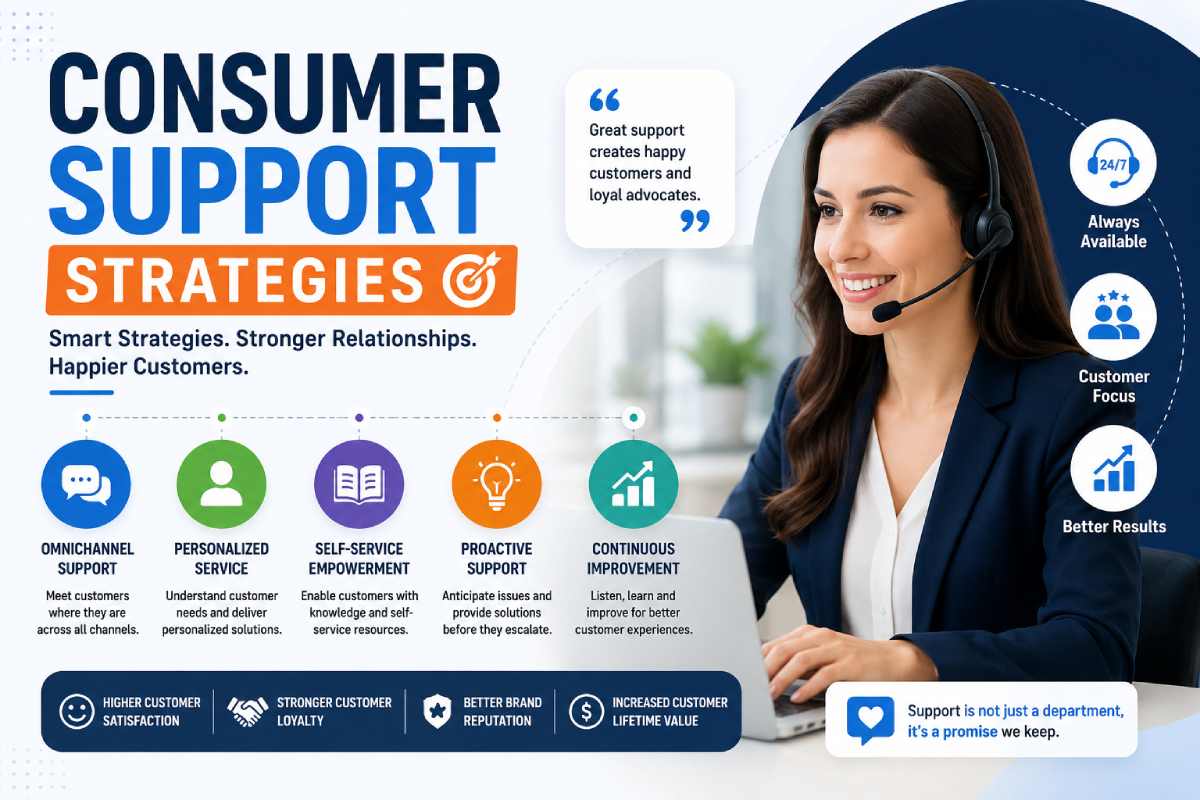
Consumer Support Strategies: A Complete Guide for Modern Businesses

Introduction
Customer support strategies are essential for any business trying to build long-lasting relationships with customers in today’s competitive world. For both online and offline or omni-channel businesses, providing good customer support can play a vital role in ensuring the customer satisfaction and retention as well as improving the brand image.
Today’s customer desires prompt responses and personal interaction, and the company that fails to meet this desire at each channel is at risk of losing customers to those companies that are able to deliver an exceptional experience at every point of interaction. By contrast, companies with well-designed customer support strategies will experience high customer loyalty, better brand advocates and higher revenue.
Research by Microsoft Customer Service and Support suggests that customer experience is quickly moving up the scale as one of the most important purchasing drivers. Understanding what the customer needs and resolving issues promptly can create relationships that can last for years.
In this guide, you will find the best strategies for consumer support as well as practices for implementation and advantages of the consumer-focused approach.
Before implementing advanced community engagement the basics, it is important to start by understanding the fundamentals of supporting local businesses as a strong foundation helps consumers and organizations make more impactful purchasing decisions
This article is a part of Business Ideas
What Are Consumer Support Strategies?

Consumer support strategies are the tools, processes, and procedures that businesses use to support their customers, both before, during, and after making a purchase. These strategies can involve solving problems, answering questions, guiding the customer, and providing the customers with a positive brand experience.
Core Objectives of Consumer Support
| Objective | Description |
| Customer Satisfaction | Provide timely and efficient support to customers |
| Retention | Promote continued sales and customer loyalty. |
| Brand Reputation | Establish faith through satisfied customers |
| Problem Resolution | Address issues quickly and accurately |
| Revenue Growth | Enhance customer lifetime value with trusted relationships. |
Businesses that are pursuing these goals tend to have an edge over others in their industry.
Exploring local business banking solutions can help entrepreneurs secure funding and manage their finances more effectively.
Why Consumer Support Matters
Consumer support directly influences what consumers think about a company. A positive consumer support experience can foster customer loyalty, whereas a negative one can lose you business and generate bad press.
Studies by Harvard Business Review show that it is usually more cost-effective to keep an existing consumer than to acquire a new one. Thus, customer support is a strategic investing as well as an operational cost.
Excellent support contributes to:
- Increased customer loyalty
- Higher retention rates
- Improved brand reputation
- More referrals and recommendations
- Greater customer lifetime value
Most companies that offer excellent support over a long period of time will maintain solid, sustained long-term growth.
Key Consumer Support Strategies
1. Omnichannel Customer Support
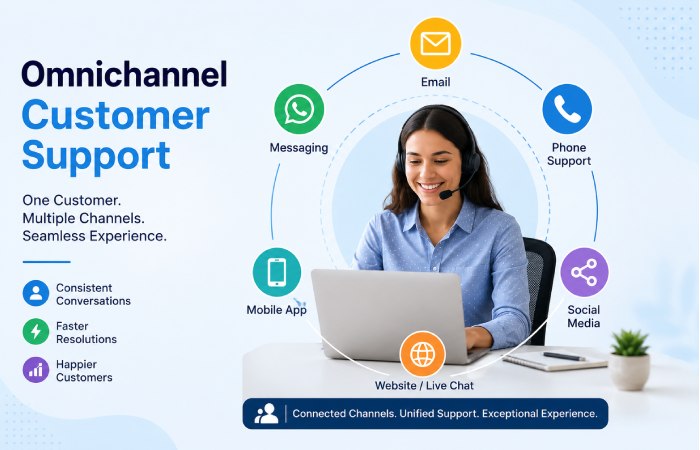
Today, customers communicate with businesses in many different ways, i.e. Via email, telephone, social networks, live chat and mobile applications.
An omnichannel strategy helps provide a similar customer experience, regardless of what channel he decides to contact the business with. Access to customer history data minimizes customer frustration and enables efficient operations.
Omnichannel Support Channels
| Channel | Benefits |
| Detailed communication and documentation | |
| Phone Support | Personalized and immediate assistance |
| Live Chat | Quick problem resolution |
| Social Media | Public engagement and responsiveness |
| Mobile Apps | Convenient support access |
| Self-Service Portals | Reduced support workload |
Companies that combine these channels produce improved customer satisfaction and experience.
2. Personalized Customer Service
Customers expect personalization now. They want agents to know about their past, choices and their interactions.
Businesses can personalize support by:
- Using CRM systems
- Tracking purchase history
- Remembering customer preferences
- Offering customized recommendations
- Addressing customers by name
3. Proactive Customer Support
Most businesses only find out that customers have problems. However, support will anticipate and resolve problems before the problem escalates.
Examples include:
- Service outage notifications
- Product update announcements
- Follow-up emails after purchases
- Maintenance reminders
- Educational content and tutorials
Proactive communication demonstrates commitment to customer success and reduces support requests.
Importance of Technology in Consumer Support
Modern consumer support operations rely heavily on technology. With the right technology, businesses can better analyze the customers behavior, respond quickly to issues and even automate most of the routine work.
Essential Consumer Support Technologies
| Technology | Purpose |
| CRM Software | Manage customer relationships |
| Chatbots | Provide instant responses |
| Help Desk Systems | Track and resolve tickets |
| Knowledge Bases | Enable self-service support |
| Analytics Tools | Measure support performance |
| AI Solutions | Enhance efficiency and personalization |
These are the leading companies in combining technologies like these to develop effective, scalable support systems.
The Role of Self-Service Support
Consumers prefer to solve the problem on their own rather than calling a representative.
Self-service options include:
- Frequently Asked Questions
- Knowledge bases
- Video tutorials
- Community forums
- User guides
According to Salesforce Customer Service Resources, many customers prefer self-service solutions when they can quickly find accurate information.
It is to the customer’s and business’s advantage to have a robust self-service platform that minimizes customer support expenses while maximizing convenience.
Measuring Consumer Support Performance
To improve customer support, organizations must track performance metrics and identify opportunities for enhancement.
Key Performance Indicators (KPIs)
| KPI | What It Measures |
| First Response Time | Speed of initial customer response |
| Resolution Time | Time required to solve issues |
| Customer Satisfaction Score (CSAT) | Overall satisfaction level |
| Net Promoter Score (NPS) | Customer loyalty and advocacy |
| Ticket Volume | Number of support requests |
| Customer Retention Rate | Ability to keep customers over time |
Monitoring these metrics helps businesses make data-driven improvements.
Building a Customer-Centric Support Culture
Technology alone cannot drive remarkable customer experiences, organizations must also foster a customer-centric culture.
A customer-centric culture involves:
- Employee training
- Empowered support teams
- Clear communication standards
- Continuous feedback collection
- Commitment to service excellence
Employees will then focus more intently on consistently delighting those that do business with you.
Leaders can coach their people to focus on each interaction not just as one of selling products and services, but as an opportunity to build that trust and relationship.
Common Consumer Support Challenges
Even well-established organizations face support-related challenges.
Challenges and Solutions
| Challenge | Solution |
| High Ticket Volume | Automation and self-service resources |
| Long Wait Times | Increase staffing and optimize workflows |
| Inconsistent Responses | Standardized training and documentation |
| Customer Frustration | Faster resolution processes |
| Limited Resources | AI-powered support tools |
| Communication Gaps | Omnichannel integration |
Addressing these challenges proactively improves overall support effectiveness.
Future Trends in Consumer Support
Consumer service is continually changing as technology improves.
Key trends include:
- Artificial intelligence-powered assistance
- Predictive customer support
- Advanced personalization
- Voice-enabled service solutions
- Enhanced self-service platforms
- Real-time customer analytics
Organizations that adopt these technologies will deliver faster and more intelligent – and personalized – support experiences.
And as digital transformation continues, companies will more and more likely rely on AI and automation as an augmentation to human support teams, not a replacement.
Not every support strategy delivers the same results, so it can be helpful to review a detailed guide on comparison different methods of supporting local businesses before deciding which approach best aligns with your goals.
Conclusion
Consumer support strategies are important for customers to receive a good experience and business growth. Today’s consumer expects fast, efficient and personal service from the business across a variety of channels. The companies that use multiple communication channels, provide pro-active support, offer self-service options, build a customer focused culture are the ones to survive and succeed in the long run. By taking the use of technology, tracking of support performance, improving the procedures the business can develop a strong relation with their customers and gain customer loyalty along with a brand that is known for best service. In today’s competitive world outstanding consumer support is a necessity, not an option.