

Bad Credit Business Loan Eligibility & Requirements

Obtaining business financing is a struggle if your credit score is poor. Although having bad credit won’t always prevent you from obtaining funding, it is important to show potential lenders that there are other elements of your finances that they can take into account, such as revenue, cash flow, the length of your time in business, your existing debts, and your ability to make repayments.
Knowledge of bad credit business loan requirements may help you know what to expect before you apply. Use our guide to business loan eligibility, bad credit, credit score requirements, and the documentation you need, plus how to boost your approval odds.
This Article Belongs to Business Loans
What is a Bad Credit Business Loan?
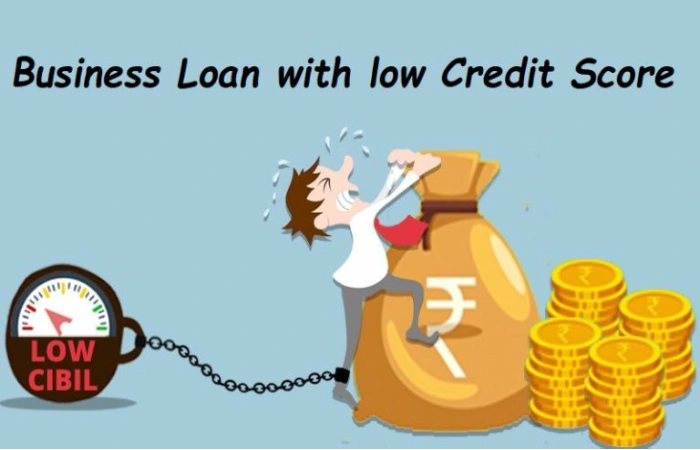
A bad credit business loan is a type of financing for businesses with less-than-stellar owner and/or company credit. Conventional lenders tend to have more rigid credit criteria, and some alternative lenders tend to be more focused on cash flow and performance.
Term loans, working-capital financing, business lines of credit, invoice financing, and other forms of commercial funding are various methods for such loans. The charge, fee, loan amount, and repayment terms are likely to be comparatively more restrictive because bad-credit borrowers may be a greater lending risk.
Bad Credit Business Loan Eligibility
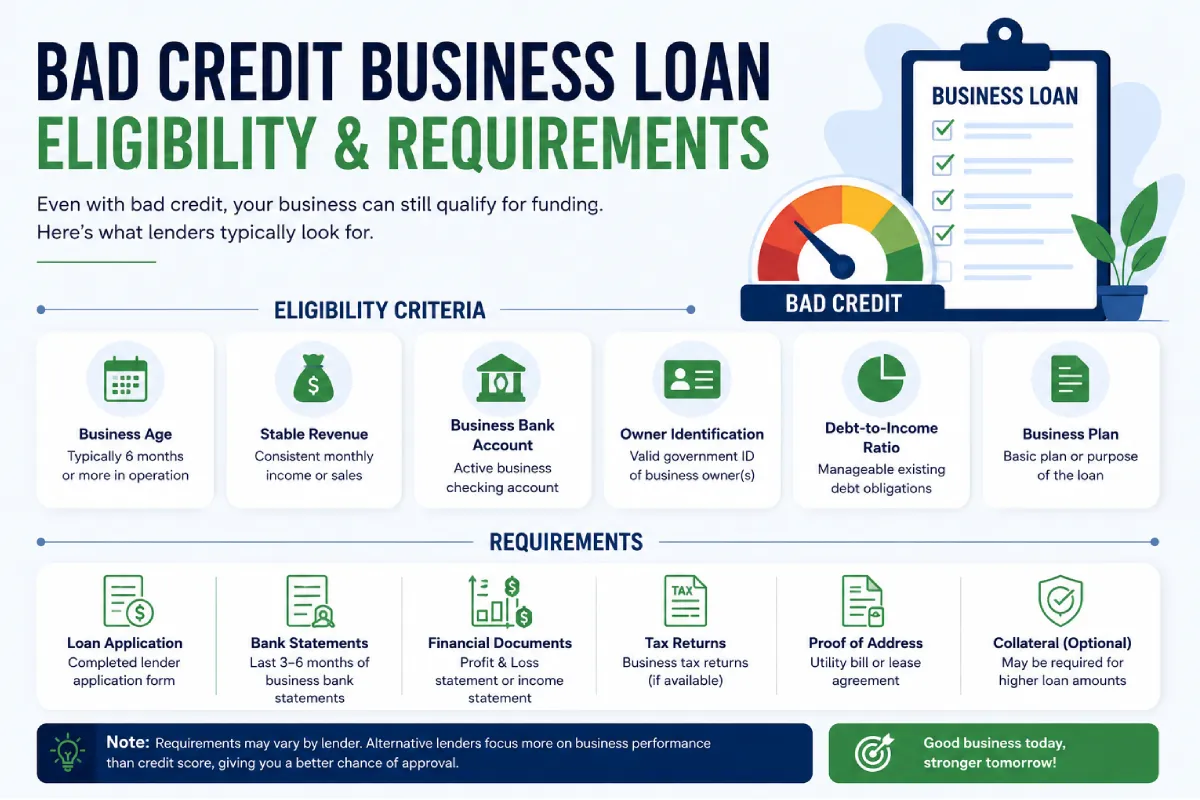
The Eligibility criteria will be different depending on the lender. Some lenders will accept lower credit scores if you can prove that your business has a high income and the ability to repay.
Business owners can also review the U.S. Small Business Administration’s business loan guidance to understand general eligibility requirements, credit considerations, and available financing programs.
| Eligibility Factor | What Lenders May Consider |
| Credit score | Personal and/or business credit history |
| Business age | Minimum operating period |
| Revenue | Monthly or annual business income |
| Cash flow | Ability to manage loan repayments |
| Debt obligations | Existing loans and outstanding liabilities |
| Business type | Industry and legal structure |
| Bank statements | Recent transaction history |
| Collateral | Assets offered to secure financing |
For business loan eligibility, with bad credit, lenders may assess the complete financial profile rather than relying on the credit score alone.
Minimum Credit Score for a Business Loan
There is no universal minimum credit score business loan requirement. Each lender establishes its own underwriting criteria.
A bank might be more comfortable with a solid credit history, although alternative lenders could be willing to lend to a lower score. But a low score can impact the amount you can borrow, the interest rate, repayment period, and security needed.
| Credit Profile | Possible Lending Consideration |
| Strong credit | Generally more financing options |
| Average credit | May qualify for conventional financing |
| Lower credit | Alternative financing may be considered |
| Very poor credit | Additional documentation, collateral, or guarantees may be required |
A credit score is only one part of the lending decision. Strong revenue and consistent cash flow may help demonstrate repayment ability.
Bad Credit Business Loan Requirements
The specific bad credit business loan requirements depend on the lender and type of financing. Common requirements include proof of business ownership, revenue information, bank statements, tax records, and identification.
Lenders may also review outstanding debts and recent credit activity to determine whether additional borrowing is affordable.
Documents for Business Loan
Common documents for business loan applications include:
| Document | Purpose |
| Government-issued ID | Verifies the applicant’s identity |
| Business registration documents | Confirms business ownership and structure |
| Bank statements | Shows business cash flow |
| Tax returns | Helps verify income and financial history |
| Profit and loss statements | Shows business performance |
| Balance sheet | Provides information about assets and liabilities |
| Business debt information | Helps assess existing obligations |
| Ownership documents | Confirms owners and authorized applicants |
Not every lender will require every document. Online lenders may use electronic financial data to simplify the application process.
How to Qualify for a Business Loan With Bad Credit
If you want to qualify for a business loan with bad credit, focus on demonstrating that your business can comfortably handle the proposed repayment.
Regular income is especially important for many lenders. Keeping sound financial records, eliminating unnecessary debt, and keeping business and personal finances separate will also help.
Some lenders may accept collateral or require an application with a qualified guarantor, though both can pose extra financial risk.
Factors That Can Improve Approval Chances
Business owners with poor credit can take several steps before applying:
- Check your credit reports for errors or outdated information.
- Organize financial documents so the lender can verify income quickly.
- Demonstrate consistent business revenue through bank statements and financial records.
- Reduce existing debt where possible to improve repayment capacity.
- Compare lenders carefully, including interest rates, fees, collateral requirements, and repayment terms.
Avoid submitting numerous applications without understanding the lender’s eligibility criteria, as some credit inquiries may affect your credit profile.
Secured vs. Unsecured Business Loans for Bad Credit
A secured business loan requires an asset as collateral, while an unsecured loan generally does not.
| Feature | Secured Loan | Unsecured Loan |
| Collateral | Usually required | Usually not required |
| Risk to borrower | Collateral may be at risk | No specific asset pledged |
| Credit requirements | May be more flexible | Can be stricter |
| Loan terms | May be more favorable | May carry higher costs |
| Application | May require asset documentation | May rely more heavily on financial records |
The right option depends on the business’s financial position and the lender’s terms.
Final Thoughts
Business loans for bad credit can be hard to come by, but business owners may have options. Knowing the bad credit business loan requirements, reviewing the lender’s eligibility rules, and gathering financial records can help make the process easier.
Before taking on any loan, compare the overall cost of borrowing, loan fees, repayment terms, security required, and ramifications of missed payments. And most of all, determine the loan amount that your business cash flow can easily accommodate.