

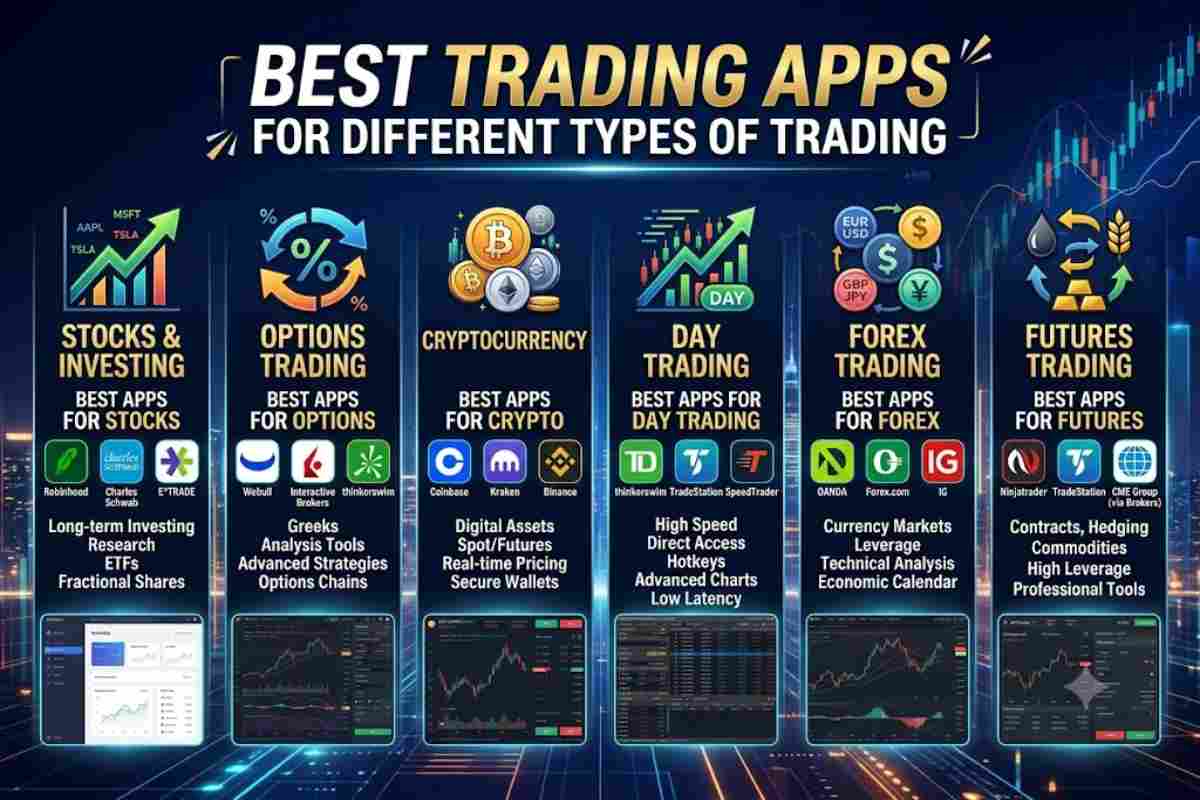
Best Trading Apps for Different Types of Trading in India

Picking a trading app that’s perfect for your needs largely relies on the trading style you adopt, the financial products you plan to trade and the investments you seek to attain. The trading app ideal for intraday traders might not suit a mutual fund investor, or an investor inclined to make long-term investments.
Below is a comparison of factors to analyze when selecting best trading apps for a certain style of trading, including:Stocks, Option, Futures, Intraday, Mutual Funds, long term investments.
This Article Belongs to Investment App Reviews
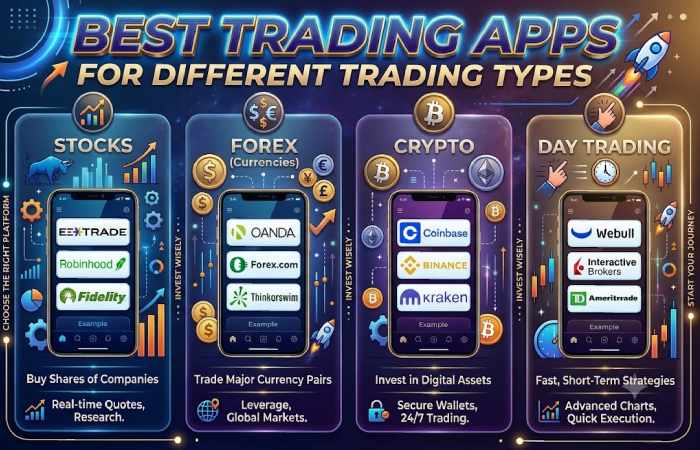
Best Trading Apps for Different Trading Types
| Trading Type | What to Look For | Suitable App Features |
|---|---|---|
| Intraday Trading | Fast execution and real-time data | Advanced charts, alerts, low brokerage |
| Options Trading | Options chain and strategy tools | Greeks, option chain, risk analysis |
| Stock Trading | Easy order placement | Live prices, research, charts |
| Futures Trading | Margin and risk management | Real-time data, advanced orders |
| Long-Term Investing | Simple portfolio management | Mutual funds, SIPs, reports |
| Mutual Funds & Stocks | Multiple investment products | Stocks, ETFs, mutual funds, SIPs |
1. Best App for Intraday Trading in India
The features of a good app for intraday trading in India should include quick execution of orders, reliable market data, complex charting, and flexible order types. Since intraday traders, many times, would like to open and close the same positions on the same trading day, low order execution latency and order charges would surely make a difference in the return.
Features worth looking for include real-time price feeds, stop-loss functionality, alerts on price and, possibly, an impressive variety of technical indicators and transparent transaction charges. A simple user-friendly interface would be highly valued, as traders will have a lot to track.
2. Best Trading App for Options
When it comes to option trading, you’ll need a more refined suite of tools than when buying a few shares of stock. Ideally, the right options trading app should be equipped with an options chain and strike-wise prices and open interest, charts, and a tool that helps analyze the various option strategies.
Advanced traders could possibly find value in options greeks, implied volatility data, the ability to back-test strategy trades or the use of tools which help in performing risk analysis. On the flip side, new traders might just want a simplified interface and a bit more educational data than on a stock trading application, before they ever invest their time learning sophisticated option trades.
3. Best Trading App for Stocks
Two significant factors when searching for the best stock trading app are ease of use and market information. A proficient stock trading app should enable traders to search for shares, view price trends, submit trade orders, track shares, and keep tabs on portfolio value.
Charts, watch lists, price notifications, financial information and research tools facilitate share selections and portfolio surveillance more effective. Apart from the stated brokerage, users should verify the brokerage on the stock, commission and exchange levies, taxes and other cesses.
4. Best App for Futures Trading
The ideal futures trading app would need fast execution, but equally important are robust risk-management features. Leveraging your futures contracts can amplify wins or losses to similar proportions.
Key aspects you’ll want to search for in an application of this type include margin information, a futures quoted service (realtime futures quotes), stops-loss ordering, advanced chart systems and real-time updates on your current position. You’ll want to educate yourself on contract specifications, expiration dates, margin requirements and possible loss risks before you start trading futures contracts.
5. Best Trading App for Long-Term Investing
Long-term investors have different requirements from active traders. The best trading app for long-term investing should make it easy to build and monitor a diversified portfolio over several years.
Investors may prioritise low account-related costs, portfolio tracking, company information, mutual funds, ETFs, SIP facilities, and easy access to statements. A simple interface can be more valuable than highly advanced trading tools for someone who invests periodically rather than trading every day.
6. Best App for Mutual Funds and Stocks
To get into both equities and mutual funds consider one of the best apps for mutual funds and stocks on the internet that allow several investment products from a single portal.
One portal would help monitor the stocks, mutual funds, ETFs and other investment products from a single dashboard. While opening the account, compare funds available, ways to invest, transaction charges, tools for portfolio and the user friendly of the app.
How to Choose the Right Trading App
Your choice should depend on how you plan to trade or invest, rather than simply selecting the app with the lowest advertised brokerage.
| Factor | Why It Matters |
|---|---|
| Brokerage | Affects frequent trading costs |
| Platform reliability | Important when placing time-sensitive orders |
| Charts | Helps with technical analysis |
| Order types | Useful for managing entries and exits |
| Research | Supports informed investment decisions |
| Mutual funds | Important for diversified investing |
| Portfolio tracking | Helps monitor investments |
| Security | Protects your account and financial information |
| Customer support | Useful when resolving account issues |
Before choosing a trading platform, investors should also verify the broker or intermediary through official regulatory resources such as the SEBI Investor portal and review the available investor-safety information.
Final Thoughts
But no single stock trading app works for all. While an intraday trader needs speedy execution and detailed charts, an options trader might need specialized instruments for derivatives trading, and a long term investor might focus on portfolio management and mutual funds.
While evaluating your trading app, consider brokerage and other costs, products you trade, instruments, reliability and safety, and usability. Most importantly, pick one that’s at par with your proficiency and investment horizon over cheap zero brokerage models.