

Trading App Brokerage, Charges & Fees: Complete Guide for India

Choosing a trading app is not only about a simple interface or advanced charts. Trading app brokerage, charges and fees can directly affect your investment returns, especially if you trade frequently. Before opening an account, investors should understand brokerage, demat fees, annual maintenance charges and other applicable costs.
Various platforms charge differently. Some of the them highlight Zero brokerages on certain transactions while some of them levy fixed charges or a percentage of the trade value. Comparison with all these charges will allow you to choose an app according to your trade preference and budget.
This Article Belongs to Investment App Reviews
What Are Trading App Brokerage Charges?
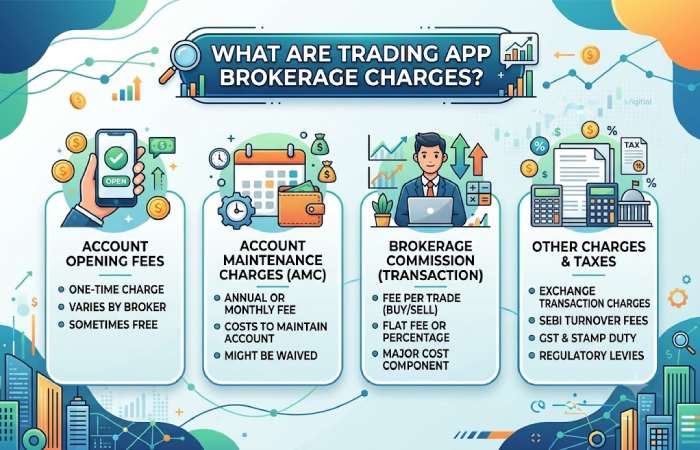
Brokerage fees are the amounts levied by a broker, for buying and selling of trading app shares. The brokerage charge would vary, among brokers and segment or type of trade.
For example, you can have brokerage fee on equity delivery, equity intraday and on F&O, with specific fees on different trades or segments. A broker can, for example, charge brokerage on intraday trades but can offer free equity delivery trading.
Brokerage is only one part of the total cost. Investors should also consider statutory taxes and exchange-related charges before comparing platforms.
Common Charges on Trading Apps
The following table shows the main costs investors may encounter:
| Charge | What It Means |
|---|---|
| Brokerage | Fee charged for executing trades |
| Demat account charges | Fees associated with maintaining securities electronically |
| Annual Maintenance Charges (AMC) | Recurring fee for maintaining a demat account |
| STT | Securities Transaction Tax imposed by the government |
| GST | Tax applicable to brokerage and certain service charges |
| Exchange transaction charges | Charges levied by stock exchanges |
| SEBI charges | Regulatory charges applicable to transactions |
| Stamp duty | Government levy applicable to securities transactions |
The exact amount can vary between brokers and transaction types, so investors should check the latest official pricing schedule before trading.
Investors should also understand applicable regulatory and statutory costs before comparing brokers. For more information about investor-related regulations and market participation, refer to SEBI investor resources.
Lowest Brokerage Trading App in India: What to Look For
Searching for the lowest brokerage trading app in India can be useful, but the cheapest headline brokerage does not always mean the lowest overall cost.
A better approach is to compare the complete fee structure. Check whether the broker charges for intraday trades, options, account opening, demat maintenance, order execution and other services.
For frequent traders, even a small difference in per-order charges can become significant over time. Long-term investors, meanwhile, may place more importance on delivery brokerage and annual account costs.
Zero Brokerage Trading App in India
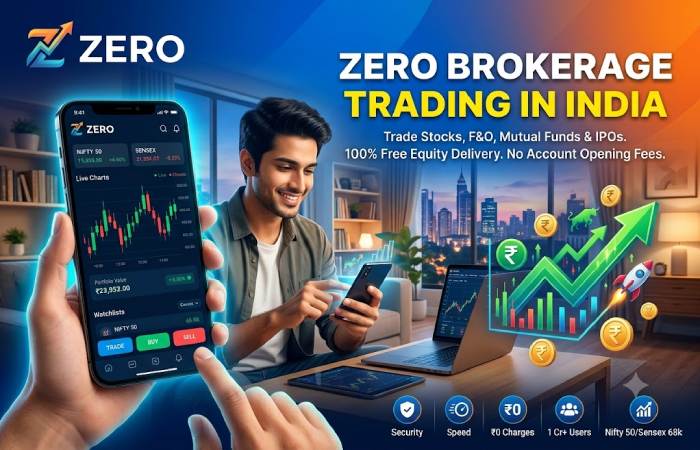
A zero brokerage trading app in India generally means that the broker does not charge brokerage for specific types of transactions, often subject to its pricing terms.
However, “zero brokerage” does not necessarily mean “zero charges.” Statutory and exchange-related charges may still apply.
Before choosing a zero-brokerage platform, check:
- Which segments qualify for zero brokerage
- Whether intraday or derivatives trades have charges
- Demat account fees
- Annual maintenance charges
- Transaction and regulatory charges
- Applicable taxes
This gives you a more realistic picture of the total cost of trading.
Trading App Charges Comparison
A trading app charges comparison should focus on your actual investment behaviour rather than just advertised brokerage.
| Factor | Why It Matters |
|---|---|
| Equity delivery brokerage | Important for long-term investors |
| Intraday brokerage | Important for active traders |
| F&O charges | Relevant for derivatives traders |
| Demat AMC | Affects long-term account costs |
| Account opening fee | One-time cost when starting |
| Other transaction charges | Can increase the effective trading cost |
Always compare the latest fee schedules directly from the broker because pricing can change.
Demat Account Charges Explained
Demat account charges are costs associated with holding securities electronically. Depending on the provider, you may encounter account opening fees, annual maintenance charges and transaction-related fees.
Some brokers offer free account opening or discounted AMC plans, while others may have different charges depending on the account type.
For investors who mainly buy and hold stocks, AMC and other account-maintenance costs can be more important than small differences in trading brokerage.
Annual Maintenance Charges Trading App
Annual maintenance charges trading app users pay are generally associated with maintaining the demat account. These charges may be collected annually or according to the broker’s stated billing structure.
Before opening an account, check whether the AMC is:
- Free for a particular period
- Waived under certain conditions
- Charged annually
- Different for specific account categories
A low brokerage platform with high recurring account costs may not necessarily be cheaper overall.
How to Reduce Trading Costs
Investors can control costs by selecting a broker that matches their trading frequency. Compare brokerage and non-brokerage charges, avoid unnecessary transactions, and understand the applicable statutory fees.
For beginners, a transparent pricing structure may be more valuable than choosing an app solely because it advertises the lowest brokerage.
Final Thoughts
Understanding trading app brokerage, charges and fees is essential before opening a trading or demat account. Brokerage, AMC, demat charges, taxes and regulatory costs can all affect your total investment expenses.
Rather than choosing an app simply based on “zero brokerage” or cheap advertising, analyze the entire cost breakdown, and select one that caters to your investment style, transaction volume, and market choices.