

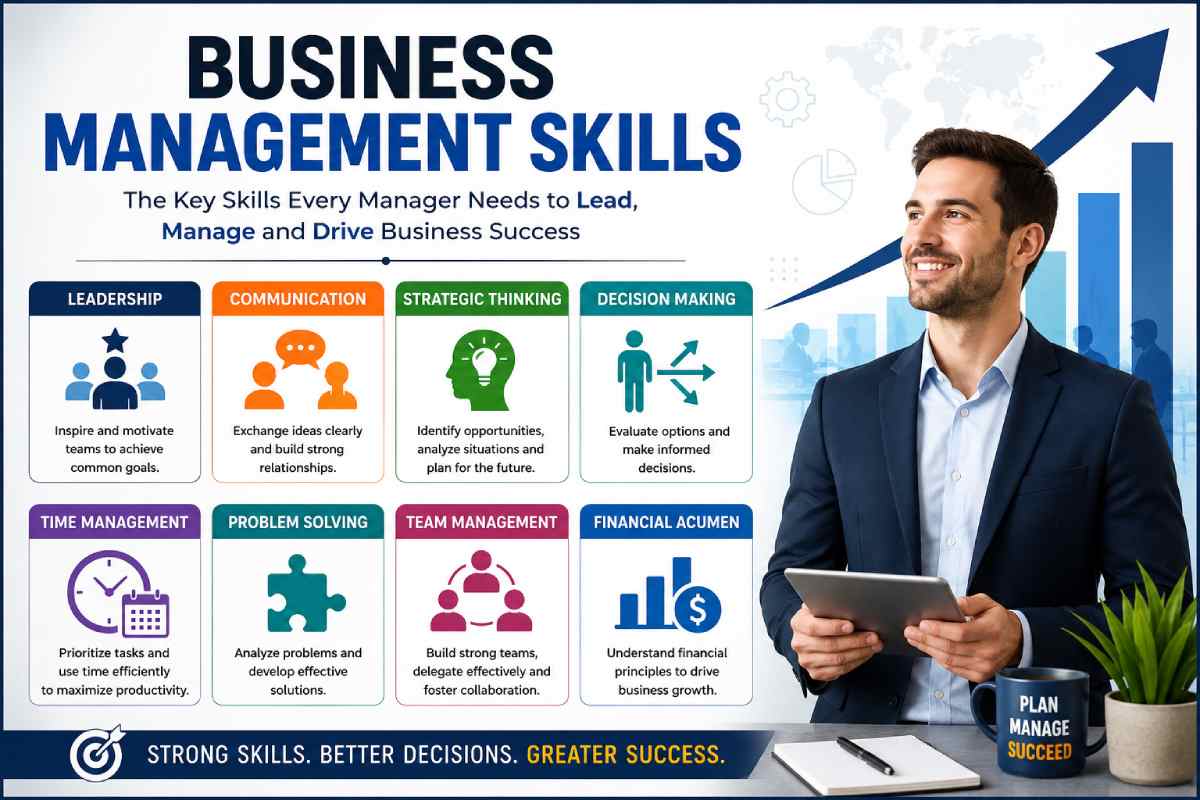
Business Management Skills: Why They Matter More Than Ever

Business success not only relates to launching a solid idea but a unique one too. Having a successful business is related to the business management capabilities of leaders. It can be the process in which they lead the employees towards a shared purpose, manage organizational goals, and efficiently use their resources to tackle any challenge thrown in their way. Whether you’re leading a startup, managing a small business, or working your way to the top in a huge corporate organization, great management skills is vital for the continued success of the business.
Business conditions today are becoming more complex as new trends continue to influence how and why businesses compete against each other, meaning that managers have to adapt to these trends. These kinds of business management skills are not only required by company leaders and executive managers but also by entrepreneurs, team leaders and department head and basically every business professional wanting to excel in their career.
Learning better management skills will certainly benefit managers in so many ways including increased productivity, streamlined business operations, increased staff satisfaction, and a boost in the long-term success of the company.
What are Business Management Skills?
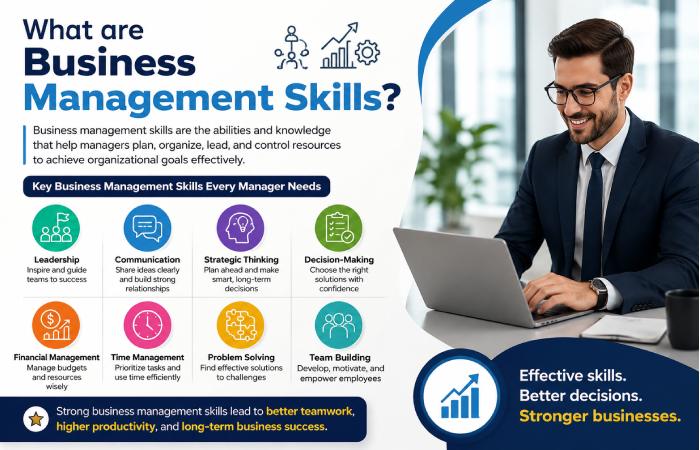
Business management skills consist of the knowledge, talents, and qualities you must employ to strategically organize, lead, control, and prepare for the future. These skills assist you in managing individuals, cash, data technology, and techniques for getting the organisational aim. A thriving supervisor leverages each interpersonal expertise and technical competence to help their groups while also making essential strategic enterprise selections.
Core Business Management Skills
| Skill | Description | Business Benefit |
| Leadership | Inspiring and guiding employees | Higher motivation and productivity |
| Communication | Sharing information clearly | Better teamwork and fewer misunderstandings |
| Strategic Thinking | Planning long-term goals | Sustainable business growth |
| Decision-Making | Choosing effective solutions | Faster problem resolution |
| Financial Management | Managing budgets and costs | Improved profitability |
| Time Management | Prioritizing important tasks | Increased efficiency |
| Problem Solving | Addressing operational challenges | Reduced business risks |
| Team Building | Developing strong teams | Better collaboration |
Why Management Skills Are Important
Good leadership helps organizations to stay at the top in terms of competitiveness and enhances overall organizational performance. Managers who have good management skills can contribute to a work culture that results in better employees satisfaction and increased accomplishment of business objectives. Moreover, good management is responsible for better management of conflict within an organization, enhancement in the satisfaction level of the customer, and higher efficiency at an organization level.
It can also lead to a better retention rate of employees and good financial performance. As decisions made are result of planning and better communication with other members of the organizations instead of guess work.
Leadership Skills for Managers
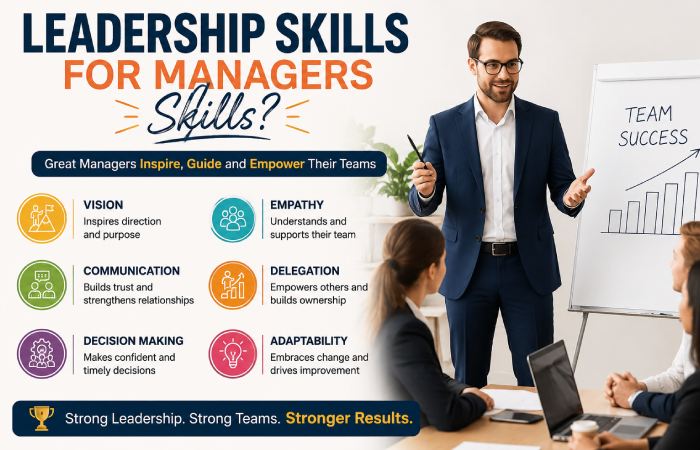
While most skills will contribute to management and job effectiveness, managerial leadership skills are by far the most impact. Leading isn’t just about delegating tasks-it’s about encouraging and engaging employees, as well as setting the vision. Good leaders leverage team members’ skill sets, encourage employees to grow professionally, and promote both responsibility and risk-taking.
Leadership Skills Every Manager Should Develop
| Leadership Skill | Purpose | Workplace Impact |
| Emotional Intelligence | Understanding employee emotions | Stronger relationships |
| Motivation | Encouraging high performance | Better productivity |
| Delegation | Assigning responsibilities effectively | Efficient workflow |
| Conflict Resolution | Managing disagreements | Healthier workplace |
| Coaching | Developing employee skills | Long-term business success |
| Adaptability | Responding to change | Greater organizational resilience |
Managers who invest in leadership development often build stronger teams capable of achieving challenging business objectives.
Communication Skills in Management
An organization can hardly achieve success without great communication skills in management. Managers express objectives, communicate with employees about what’s good and bad and sort out any differences among employees and between managers and employees, bargain with customers and manage many projects together at a time. But with the absence of the great skills to communicate, misunderstandings will arise misunderstanding, project missed the deadline, staff unmotivated and low productivity.
Strong communication includes:
- Active listening
- Clear verbal communication
- Professional writing
- Constructive feedback
- Effective presentation skills
They need to support open communication, where their subordinates are free to express their views and concerns. The result of this will be improved and trust amongst all.
Types of Management Communication
| Communication Type | Example | Benefit |
| Verbal | Team meetings | Immediate clarification |
| Written | Emails, reports | Permanent documentation |
| Non-verbal | Body language | Reinforces messages |
| Digital | Video conferences | Supports remote teams |
| Feedback | Performance reviews | Employee development |
Strategic Management Skills
In today’s dynamic world, strategic management competencies are of paramount importance for any modern business manager. Strategic management is defined as the set of decisions and actions that determine long-run, industry-member-attracting opportunities and the approach a firm will use to take advantage of these opportunities.
These managers keep their focus on future opportunity and risk in making key strategic choices. Instead of tracking current performance closely, these professionals use factors such as current conditions in the market, customers’ expectations, developing industry technology, and economic conditions as the main factors guiding business decision-making.
Strategic thinking enables businesses to:
| Strategic Activity | Business Outcome |
| Market Analysis | Better competitive positioning |
| Goal Setting | Clear organizational direction |
| Resource Planning | Improved efficiency |
| Risk Assessment | Reduced uncertainty |
| Performance Measurement | Continuous improvement |
| Innovation Planning | Sustainable growth |
Those companies with robust strategic plans typically tend to respond more effectively to industry changes and economic instability.
Business Leadership Skills That Drive Success
One of the foundations for a business to be successful depends on the possession of business leadership qualities. With qualities of business leadership, a manager can achieve the capacity of guiding his subordinates to keep attention on the company goals. Good business leaders can achieve honesty, responsibility, confidence, and a desire to grow and develop as a manager, ability to guide their employees towards innovations and collaboration between divisions of his organisation.
Some of the most valuable business leadership skills include:
| Leadership Quality | Importance |
| Vision | Guides long-term growth |
| Integrity | Builds employee trust |
| Accountability | Encourages responsibility |
| Innovation | Promotes continuous improvement |
| Collaboration | Strengthens teamwork |
| Decision-Making | Improves organizational performance |
Business leadership can mean that some companies have a better team compared to their opponents. This could be because the employees have support, motivation and they know they’re on board for business success.
Developing Managerial Competencies
Managerial competencies are the aggregate of the knowledge, skills, behavior, and attitudes that enable a manager to perform their functions. While unlike the technical competencies, the competencies combine expertise and Interpersonal competence.
Key competencies include:
| Competency | Description |
| Analytical Thinking | Evaluating complex information |
| Business Acumen | Understanding organizational operations |
| Change Management | Leading organizational transformation |
| Customer Focus | Prioritizing customer satisfaction |
| Innovation | Encouraging creative solutions |
| Ethical Leadership | Making responsible decisions |
| Talent Development | Coaching future leaders |
Developing these abilities on an ongoing basis makes managers more effective leaders who are able to assume more responsibility over time.
How to Improve Business Management Skills
Developing leadership skills involves education, practice and ongoing self-development.
Managers can strengthen their capabilities by:
- Participating in leadership training programs.
- Reading business and management books.
- Learning from experienced mentors.
- Practicing effective communication daily.
- Seeking constructive feedback from employees.
- Staying informed about industry trends.
- Developing strategic thinking through business planning.
Managers need to stay current with their skill development so that they know what to expect going forward with their business.
Conclusion
Excellent management business skills and talents and the ability to excel in management leadership roles are vital to any company seeking success. Mastering basic business skills such as improving management skills and managers’ leadership skills, the development of better management communication skills, or acquiring advanced management strategies will inevitably lead to better business outcomes and improve any business manager’s decision-making, employees’ work and motivation, and productivity. As an entrepreneur, or departmental head, or to-be executive, increasing their business capacity through learning and growing better leadership and management skills is one of the wise choices a person could make, no matter he is working alone or not.