

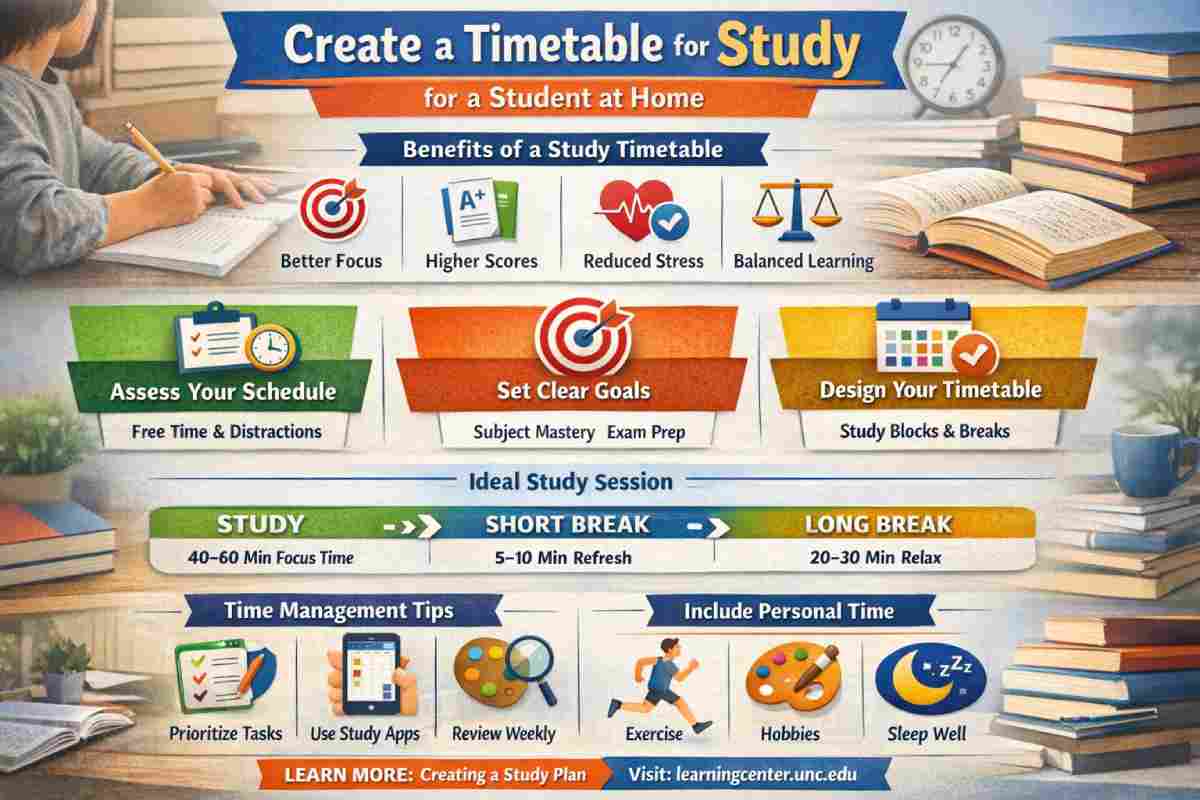
Timetable for Study for a Student at Home

Creating an effective study timetable at home is one of the most powerful ways to improve focus, productivity, and academic performance. Research in Educational Psychology shows that structured routines improve retention, reduce stress, and build long-term discipline. According to Harvard University, consistent study habits and time-blocking techniques significantly enhance learning efficiency. This guide blends proven strategies with practical structure—presented in a balanced mix of explanation and tables for easy implementation.
The Advantages of a Student Study Timetable
A well-planned timetable is more than just a schedule—it is a system that trains the brain to work efficiently. Students who follow structured study plans develop consistency, avoid last-minute cramming, and perform better in exams.
A timetable helps distribute study time across subjects, ensuring difficult topics receive extra attention while maintaining overall balance. It also reduces procrastination by assigning clear time slots to tasks. Over time, this creates a sense of control, confidence, and reduced academic stress.
Key Benefits of a Study Timetable
| Benefit | Description | Impact on Students |
|---|---|---|
| Time Management | Allocates fixed hours for each task | Reduces wasted time |
| Better Retention | Consistent revision improves memory | Higher exam scores |
| Reduced Stress | Avoids last-minute cramming | Improved mental health |
| Balanced Learning | Covers all subjects evenly | Strong overall performance |
| Increased Discipline | Builds routine habits | Long-term success |
Crafting the Perfect Timetable for Study at Home
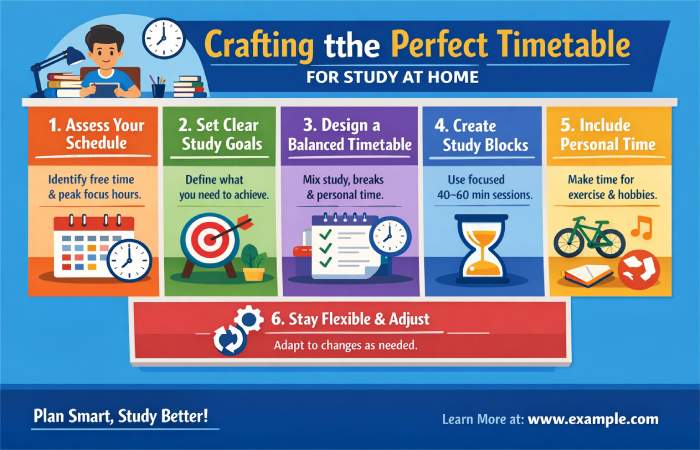
Designing a timetable is not about copying others—it’s about building a system tailored to your lifestyle, energy levels, and goals. A personalized approach ensures sustainability and effectiveness.
1. Assess Your Current Schedule
Before creating a timetable, analyze how your day is currently spent. Identify free time slots and distractions.
| Factor | What to Analyze | Example |
|---|---|---|
| Fixed Commitments | Classes, chores, tuition | 9 AM–2 PM school |
| Free Time | Available study hours | 4 PM–8 PM |
| Peak Focus Time | When you feel most alert | Morning or evening |
| Distractions | Mobile, TV, social media | Reduce during study |
2. Set Clear Study Goals
A timetable without goals is just a routine. Clear objectives help you stay focused and measure progress.
| Goal Type | Description | Example |
|---|---|---|
| Subject Mastery | Focus on weak subjects | Improve Math problem-solving |
| Exam Preparation | Revision and mock tests | Practice past papers |
| Skill Improvement | Enhance learning ability | Improve writing speed |
| Daily Targets | Small achievable goals | Complete 2 chapters |
3. Design a Balanced Timetable
A good timetable balances study, rest, and personal activities. Overloading leads to burnout, while under-planning reduces productivity.
| Component | Duration | Purpose |
|---|---|---|
| Study Session | 40–60 minutes | Deep focus learning |
| Short Break | 5–10 minutes | Mental refresh |
| Long Break | 20–30 minutes | Recovery after 3–4 sessions |
This method aligns with the Pomodoro Technique, widely recommended for improving concentration and avoiding fatigue.
4. Create Structured Study Blocks
Breaking study time into focused sessions improves efficiency and prevents overwhelm.
| Time | Activity |
|---|---|
| 6:00 – 7:00 AM | Revision (High-focus subject) |
| 7:00 – 8:00 AM | Breakfast & routine |
| 10:00 – 12:00 PM | Study Session 1 (Core subject) |
| 12:00 – 12:30 PM | Break |
| 12:30 – 2:00 PM | Study Session 2 |
| 4:00 – 5:00 PM | Practice / Problem solving |
| 5:00 – 6:00 PM | Exercise / Relax |
| 7:00 – 8:30 PM | Light study / Revision |
5. Incorporate Flexibility
A rigid timetable often fails. Flexibility allows adaptation to unexpected tasks or low-energy days.
| Situation | Adjustment Strategy |
|---|---|
| Missed Session | Shift to next free slot |
| Low Energy | Switch to lighter subject |
| Extra Workload | Extend study block slightly |
| Exams Near | Increase revision time |
6. Include Personal Time
Ignoring personal well-being leads to burnout. A successful timetable includes relaxation and physical activity.
| Activity | Benefit |
|---|---|
| Exercise | Boosts brain function |
| Hobbies | Reduces stress |
| Social Time | Improves emotional health |
| Sleep (7–8 hrs) | Enhances memory retention |
Studies from World Health Organization emphasize that balanced routines with sleep and activity improve cognitive performance in students.
Strategies for Effective Time Management
Time management is the backbone of a successful study timetable. Without it, even the best plans fail.
1. Prioritize Tasks
Not all tasks are equal. Focus on what matters most.
| Method | Description | Use Case |
|---|---|---|
| Eisenhower Matrix | Urgent vs important tasks | Exam preparation |
| ABC Method | A = high priority, B = medium | Daily planning |
| Deadline-Based | Work by due dates | Assignments |
2. Use Time Management Tools
Digital tools can simplify scheduling and tracking progress.
| Tool Type | Example | Purpose |
|---|---|---|
| Calendar Apps | Google Calendar | Schedule planning |
| Task Managers | Todoist | Task tracking |
| Note Apps | Notion | Organizing study notes |
3. Monitor and Adjust Your Timetable
A timetable should evolve based on your performance and needs. Regular evaluation ensures continuous improvement.
| Question | Purpose |
|---|---|
| Did I complete my study goals? | Measure progress |
| Which subjects need more time? | Adjust focus |
| Was I distracted? | Improve discipline |
| Is the timetable realistic? | Ensure sustainability |
Conclusion
Creating a timetable for study at home is not about strict rules—it’s about building a system that works for you. A well-designed timetable improves focus, reduces stress, and ensures consistent progress.
By assessing your schedule, setting clear goals, using structured study blocks, and maintaining balance, you can transform your study habits completely. Combine discipline with flexibility, and your timetable will become a powerful tool for long-term academic success.
Start simple, stay consistent, and refine your approach over time—the results will follow.